
Well water treatment options confuse most homeowners because every company pushes different expensive systems, but which technology removes what you have?
Key Takeaways:
- Each treatment technology removes specific contaminants, no single system fixes every well water problem
- Water chemistry (pH, dissolved oxygen, TDS) determines whether a treatment will work at all in your specific well
- Treatment sequence matters, installing systems in the wrong order can destroy expensive filters within months
What Treatment Technology Do You Need for Each Well Water Contaminant?

Treatment technology removes specific contaminants based on size, chemistry, and physical properties. You can’t remove bacteria with a water softener. You can’t remove hardness with UV light. Each technology targets distinct contaminant categories.
| Contaminant | Best Technology | Effectiveness | Typical Cost |
|---|---|---|---|
| Bacteria/Viruses | UV Disinfection | 99.9% kill rate | $400-800 |
| Arsenic | Reverse Osmosis | 95%+ removal | $300-800 |
| Iron (Ferrous) | Oxidation + Filtration | 90-95% removal | $800-2,500 |
| Iron (Ferric) | Sediment Filtration | 99% removal | $200-600 |
| Hardness | Ion Exchange Softener | 95%+ removal | $600-2,000 |
| Nitrate | Reverse Osmosis | 90%+ removal | $300-800 |
| PFAS | Carbon + RO Combo | 95%+ removal | $1,200-3,000 |
| Hydrogen Sulfide | Oxidation + Carbon | 90%+ removal | $900-2,200 |
| Lead | Reverse Osmosis | 95%+ removal | $300-800 |
Reverse osmosis removes 95% of arsenic but costs $300-800 for under-sink units. Whole house RO systems jump to $2,000-4,000 installed. The technology works by forcing water through a semi-permeable membrane that blocks contaminants larger than water molecules.
Iron removal depends on iron type. Ferrous iron (clear water iron) needs oxidation first, air injection or chemical oxidation converts it to ferric iron, then sediment filtration removes the particles. Ferric iron (red water iron) goes straight to sediment filtration. Iron bacteria requires shock chlorination before any filter installation.
Bacteria dies under UV light at 254 nanometers wavelength. UV systems kill 99.9% of bacteria, viruses, and parasites without adding chemicals. The lamp needs replacement every 12 months regardless of usage hours.
How Does Water Chemistry Determine Which Treatment Will Actually Work?

Water chemistry analysis is the measurement of dissolved minerals, pH, and gases that determine treatment compatibility. This means your pH level, dissolved oxygen content, and total dissolved solids control whether expensive treatment equipment works or fails.
PH affects every treatment technology. Iron oxidation requires pH above 6.8. Below that level, ferrous iron won’t convert to filterable ferric iron. Water softeners work best between pH 7.0-8.5. Outside this range, resin beads lose efficiency and require frequent regeneration.
Dissolved oxygen determines iron removal success. Iron filters require dissolved oxygen above 4 ppm to oxidize ferrous iron. Low-oxygen wells produce hydrogen sulfide gas and create anaerobic conditions where iron bacteria thrive. Air injection systems add oxygen to support oxidation.
Total dissolved solids (TDS) indicates mineral content and system sizing needs. High TDS water (above 500 ppm) clogs reverse osmosis membranes faster. RO systems in high-TDS areas need larger pre-filters and more frequent membrane replacement.
Iron type determines treatment approach. Ferrous iron dissolves in water and appears clear until exposed to air. Ferric iron precipitates as red particles visible in water. Iron bacteria creates slimy biofilm and rotten egg odors. Each type needs different treatment, mixing them up destroys expensive equipment.
Temperature affects chemical reaction rates. Cold water below 50°F slows oxidation reactions. Iron filters in cold climates need longer contact time or chemical assist.
Which Contaminants Require Multiple Treatment Technologies?

Combination system designs treat multiple contaminants when single technologies can’t handle complex water chemistry. Some contamination patterns need staged treatment because one contaminant interferes with removing another.
Bacteria plus iron requires disinfection after iron removal. UV light can’t penetrate iron-clouded water. Iron removal comes first, then UV disinfection kills bacteria in clear water.
Arsenic plus hardness needs separate removal systems because water softeners can’t remove arsenic. Reverse osmosis removes arsenic but wastes 3-4 gallons per gallon produced. Softener treats hardness for the whole house, RO treats drinking water for arsenic.
PFAS plus iron bacteria requires shock chlorination, then iron removal, then carbon filtration. Iron bacteria creates biofilm that protects PFAS from carbon contact. Sequential treatment removes each barrier.
Nitrate plus hydrogen sulfide needs oxidation before reverse osmosis. Hydrogen sulfide gas damages RO membranes. Oxidation converts sulfide to filterable sulfur particles, then RO removes nitrate from clean water.
Lead plus sediment requires sediment pre-filtration before RO treatment. Sediment clogs RO membranes and reduces lead removal efficiency. Pre-filters extend membrane life and maintain lead removal rates.
Iron removal before carbon filtration prevents filter fouling and extends carbon life by 2-3x. Iron particles coat carbon surfaces and block contaminant contact. Clean water maximizes carbon effectiveness.
What’s the Correct Installation Sequence for Multiple Treatment Systems?
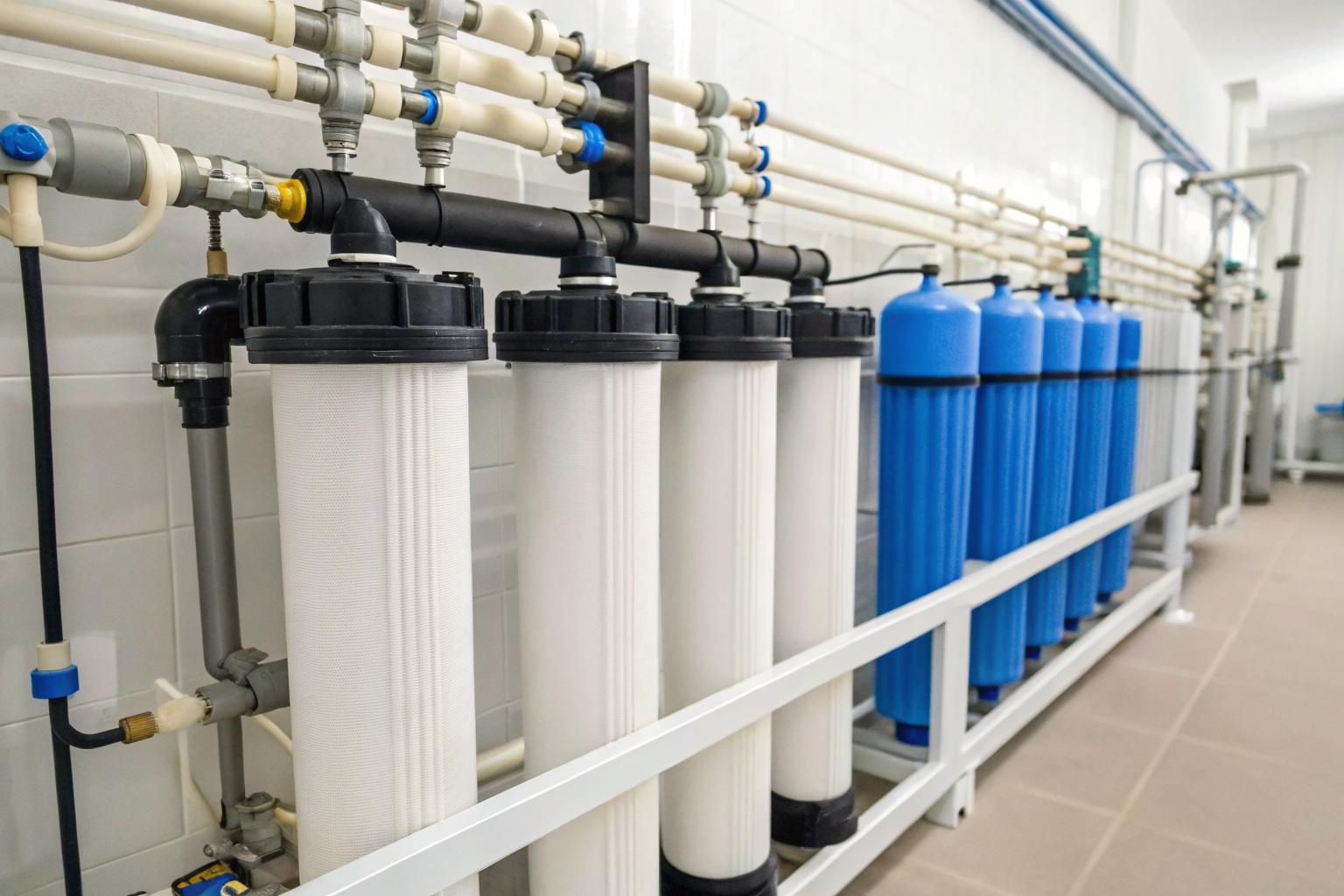
Treatment sequence order determines system longevity because upstream contamination destroys downstream equipment. Wrong installation order kills expensive components within months.
Install sediment filtration first to remove particles that damage downstream equipment. Sediment clogs pumps, scratches valve seats, and coats treatment media. Five-micron filters catch most damaging particles.
Add iron removal second because dissolved iron precipitates and stains everything downstream. Iron removal systems need clean water input but produce iron particles that need filtration before other treatment.
Install bacteria treatment third after water runs clear. UV disinfection works only in particle-free water. Bacteria treatment comes after sediment and iron removal but before chemical removal systems.
Place chemical removal last because these systems need clean, disinfected water input. Reverse osmosis, carbon filtration, and specialty chemical removal work best when sediment, iron, and bacteria are already gone.
Install water softening before the pressure tank if treating the whole house. Softened water prevents scale buildup in the pressure tank, pump, and plumbing system. Point-of-use softening goes after disinfection.
Connect bypass valves around each system to isolate equipment for maintenance without shutting off household water. Bypass capability prevents service disruption during filter changes.
Installing UV disinfection before sediment filtration reduces UV lamp life from 12 months to 3-4 months. Sediment buildup on the quartz sleeve blocks UV transmission and allows bacteria to pass through untreated.
How Do You Size Treatment Systems for Your Home’s Water Demand?

Treatment system sizing matches household water demand to prevent pressure drops and ensure adequate treated water flow. Undersized systems create bottlenecks that reduce water pressure throughout the house.
| Home Size | Peak Flow Rate Needed | System Capacity | Typical Cost Range |
|---|---|---|---|
| 1-2 Bedrooms | 6-8 GPM | 1.0-1.5 cubic feet | $800-1,500 |
| 3-4 Bedrooms | 12-15 GPM | 1.5-2.0 cubic feet | $1,200-2,500 |
| 5+ Bedrooms | 18-25 GPM | 2.5+ cubic feet | $2,000-4,000 |
| Commercial/Large Home | 30+ GPM | 3.0+ cubic feet | $3,500-6,000+ |
A 4-bedroom home needs 12-15 GPM flow rate for whole house systems vs 6-8 GPM for smaller homes. Peak demand occurs when multiple fixtures run simultaneously, shower, dishwasher, washing machine, and toilet refill.
Calculate peak demand by adding fixture flow rates. Standard shower uses 2.5 GPM, washing machine uses 3-5 GPM, dishwasher uses 2-3 GPM. Multiple bathrooms double shower demand during morning routines.
Undersized treatment systems create pressure drops that affect the entire house. A 6 GPM system serving 12 GPM demand drops pressure from 50 PSI to 25 PSI or lower. Low pressure prevents proper appliance operation.
Oversized systems waste money upfront but don’t hurt performance. The extra capacity handles future demand growth and maintains pressure during peak usage periods. Sizing up one level costs 20-30% more but prevents replacement needs.
Contact time requirements affect sizing. Iron removal systems need 6-8 minutes contact time between oxidation and filtration. Faster flow rates require larger treatment vessels to maintain contact time.
Frequently Asked Questions
Can one treatment system fix all my well water problems?
No single treatment system removes all contaminants. A water softener won’t remove bacteria, arsenic, or nitrate. A reverse osmosis system won’t remove hydrogen sulfide gas. Each technology targets specific contaminant categories based on size, chemistry, and removal mechanism.
Why did my iron filter stop working after six months?
Iron filters fail when water chemistry doesn’t support the oxidation process they require. Low dissolved oxygen, wrong pH levels, or the presence of iron bacteria can kill filter media. Your water needs 4+ ppm dissolved oxygen and pH above 6.8 for most iron removal systems to work.
Do I need to treat my whole house or just drinking water?
This depends on your specific contaminants and how they affect different uses. Health-risk contaminants like bacteria, arsenic, and nitrate need whole-house treatment. Aesthetic issues like iron staining or hard water can be treated at point-of-use for drinking water only, but you’ll still have staining and buildup throughout your plumbing.