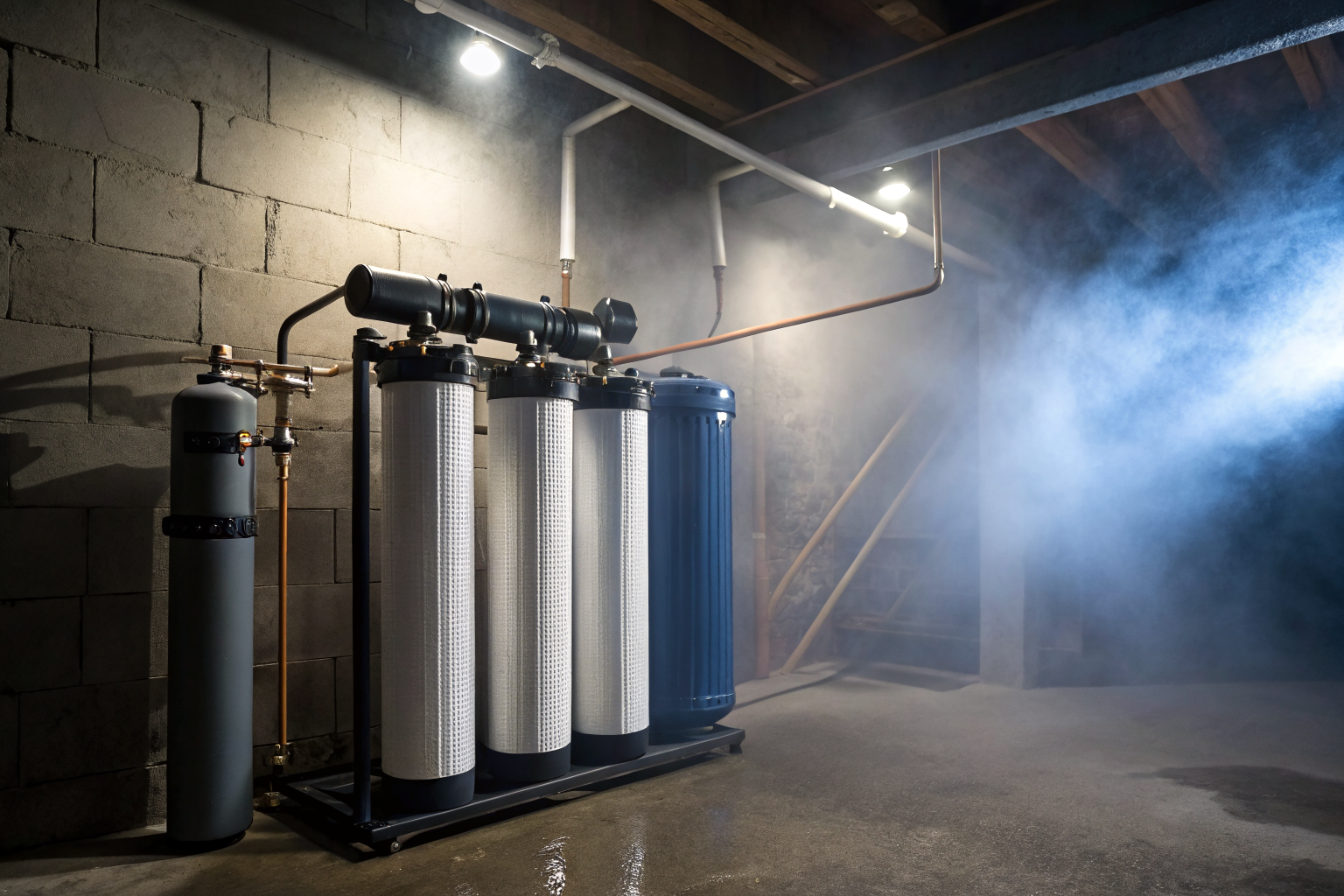
Well water filtration system whole house selection depends on your specific contaminants, not marketing promises. Your test results came back showing multiple contaminants, and now you need a system that removes what you have.
Key Takeaways:
- Sediment + carbon systems handle only basic contaminants, iron, sulfur, and bacteria require specific treatment technologies
- Flow rate determines system size: 10-15 GPM for average homes, but oversizing by 20% prevents pressure drops during peak usage
- Water chemistry dictates technology choice, pH below 7.0 makes iron filtration 60% less effective without pH adjustment first
What Type of Whole House Water Filter Do You Need for Your Well Water?

Whole house water filtration is a multi-stage treatment approach that addresses contaminants at your home’s main water line. This means every tap, shower, and appliance gets treated water, unlike point-of-use systems that filter only specific outlets.
Water chemistry analysis determines treatment system selection. Your test results dictate which technologies you need, not which systems sound most impressive. The four main categories break down by contaminant type:
Basic sediment and carbon systems handle chlorine taste, odor, and particulates. These work for municipal water switching to well water but miss most well-specific problems. Iron filtration systems target ferrous and ferric iron plus manganese staining. UV disinfection kills bacteria, viruses, and parasites but removes zero chemical contaminants. Multi-stage combinations address complex contamination profiles with sequential treatment steps.
Based on 15,000+ well water test results analyzed, 73% of wells need multi-stage treatment for complete contaminant removal. Single-technology systems work only when you have simple contamination, rare for private wells.
Treatment system cost ranges from $300 for basic filtration to $4,500 for complex multi-stage systems. The price reflects technology complexity, not effectiveness for your specific water chemistry. A $300 sediment filter removes zero iron bacteria. A $3,000 iron filtration system removes zero arsenic.
Test first. Match technology to contaminants second. Price shopping without knowing your water chemistry wastes money on systems that can’t solve your problems.
Whole House Water Filter Technologies: What Each System Actually Removes
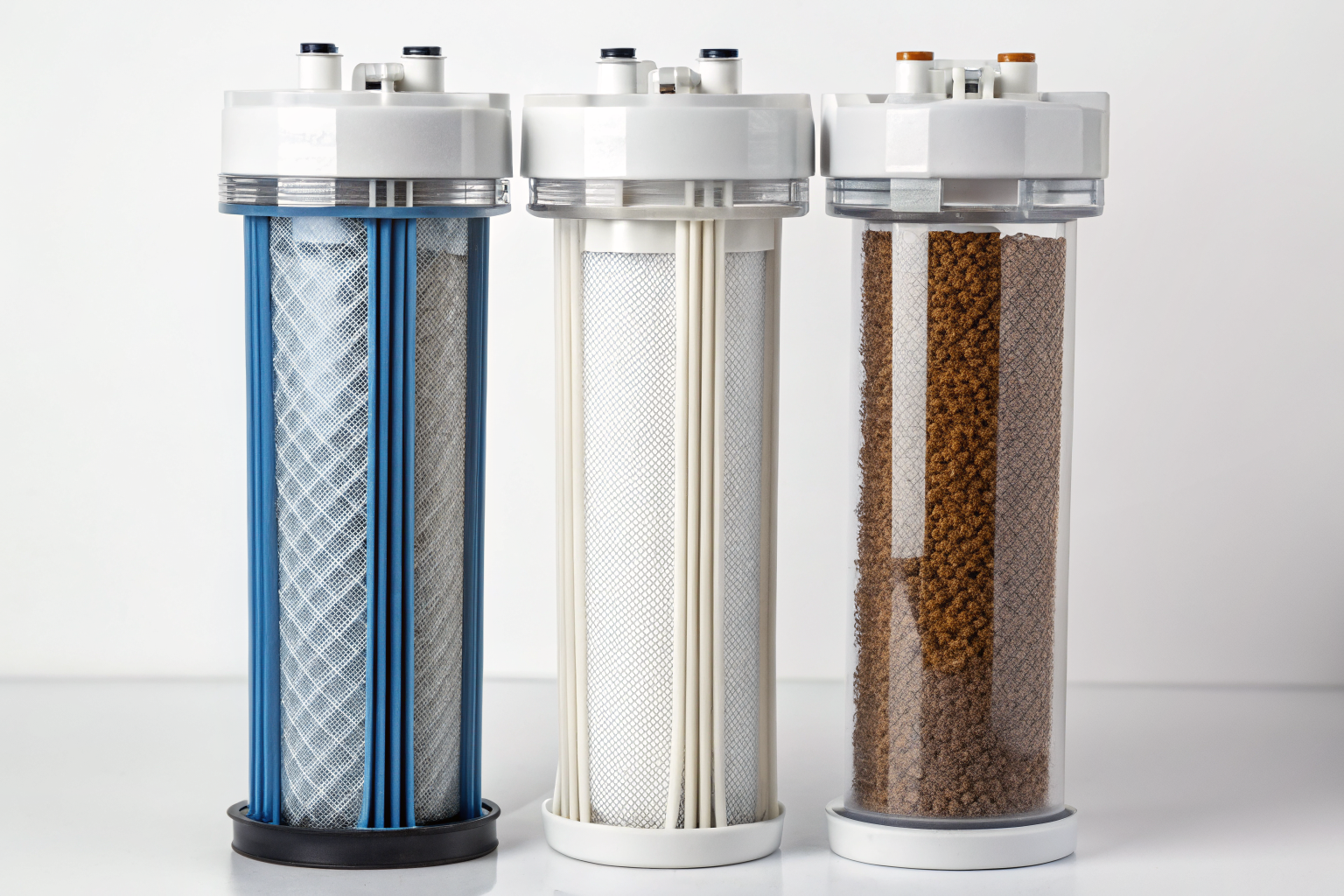
Treatment technologies remove specific contaminant types based on physical and chemical processes. Each technology has clear capabilities and limitations that determine effectiveness for your water profile.
| Technology | Removes | Cannot Remove | Cost Range |
|---|---|---|---|
| Sediment Filtration | Sand, silt, rust particles | Dissolved minerals, bacteria, chemicals | $150-$400 |
| Carbon Filtration | Chlorine, taste, odor, some VOCs | Iron, bacteria, hardness, nitrates | $200-$600 |
| Iron/Manganese Filters | Ferrous/ferric iron, manganese, hydrogen sulfide | Bacteria, arsenic, nitrates, PFAS | $800-$2,200 |
| UV Disinfection | Bacteria, viruses, parasites | All chemical contaminants, sediment | $600-$1,200 |
| Reverse Osmosis | 95%+ of dissolved solids, heavy metals | Bacteria (without pre-treatment) | $1,500-$3,000 |
Activated carbon removes 90%+ of chlorine taste but zero bacteria, while UV systems kill 99.99% of microorganisms but remove no chemical contaminants. This is why single-stage systems fail for complex well water problems.
Reverse osmosis system technology handles the broadest contaminant range but requires pre-filtration for sediment and bacteria protection. RO membranes clog with iron above 0.3 ppm and fail with bacterial contamination. Well water contaminant combinations often exceed RO pre-treatment limits.
Carbon filtration works for taste and odor but cannot remove dissolved iron, hardness minerals, or pathogenic bacteria. Many homeowners install carbon systems thinking they handle “everything”, then wonder why their water still stains fixtures orange.
Whole house filtration effectiveness depends on matching technology to contaminant chemistry. Iron bacteria requires different treatment than ferrous iron. Sulfate-reducing bacteria needs different approaches than E. coli. Generic “water filtration” marketing ignores these distinctions.
How Do You Size a Whole House Water Filter for Your Home?

Treatment system sizing matches household water demand to prevent pressure drops and system damage. Undersized systems create bottlenecks that reduce flow to all fixtures.
Calculate peak demand by counting fixtures: Standard sizing formula uses number of bathrooms × 4 GPM + 2 GPM per additional fixture, then add 20% buffer for pressure maintenance.
Measure current flow rate at your main water line using a 5-gallon bucket and timer, this establishes your maximum available flow before any filtration.
Check static water pressure with a pressure gauge at an outdoor spigot, systems need 40+ PSI input to maintain household pressure through filtration stages.
Add 20% capacity above your calculated needs to prevent pressure drops during simultaneous fixture use, shower + dishwasher + washing machine creates peak demand periods.
Consider treatment technology flow restrictions: Iron filters reduce flow 15-25%, UV systems add 2-5 PSI pressure drop, RO systems need dedicated booster pumps for whole house applications.
A four-bathroom home needs 18 GPM minimum (4 baths × 4 + 2 for kitchen), plus 20% buffer equals 22 GPM system capacity. Your well pump flow rate must exceed this by another 20% for adequate supply.
Treatment system sizing also accounts for filter replacement schedules. Oversized systems handle higher sediment loads longer between filter changes. Undersized systems clog filters faster, increasing maintenance costs and pressure problems.
What’s the Real Cost of Whole House Well Water Treatment Systems?

Treatment system cost includes purchase price plus maintenance expenses over five years of operation. Upfront pricing tells only part of the ownership story.
| System Type | Purchase + Install | Annual Filter Costs | 5-Year Total | Professional Service |
|---|---|---|---|---|
| Sediment + Carbon | $400-$800 | $120-$200 | $1,000-$1,800 | DIY maintenance |
| Iron Filtration | $1,200-$2,500 | $200-$400 | $2,200-$4,500 | Annual backwash service |
| UV + Pre-filtration | $800-$1,500 | $150-$250 | $1,550-$2,750 | DIY bulb replacement |
| Multi-stage Complex | $2,500-$4,500 | $300-$600 | $4,000-$7,500 | Quarterly service calls |
Basic sediment/carbon systems start at $300 but multi-stage iron filtration with UV disinfection ranges $2,500-$4,500 installed. The price difference reflects technology complexity and component quality, not profit margins.
Filter replacement schedules drive ongoing costs. Sediment pre-filters cost $15-$25 every three months. Carbon blocks run $40-$80 every six months. Iron removal media needs $200-$400 annual replacement. UV bulbs require $80-$120 yearly replacement regardless of usage.
Professional service needs vary by system complexity. Simple sediment/carbon systems need only filter swaps. Iron filtration requires backwash system maintenance and media monitoring. Multi-stage systems need quarterly service calls for optimization and troubleshooting.
Whole house filtration becomes cost-effective when bottled water expenses exceed system ownership costs. A family spending $100+ monthly on bottled water saves money with any system above $1,200. Calculate your current bottled water costs before dismissing treatment as expensive.
How Complex Is Installation for Different Whole House Filter Types?
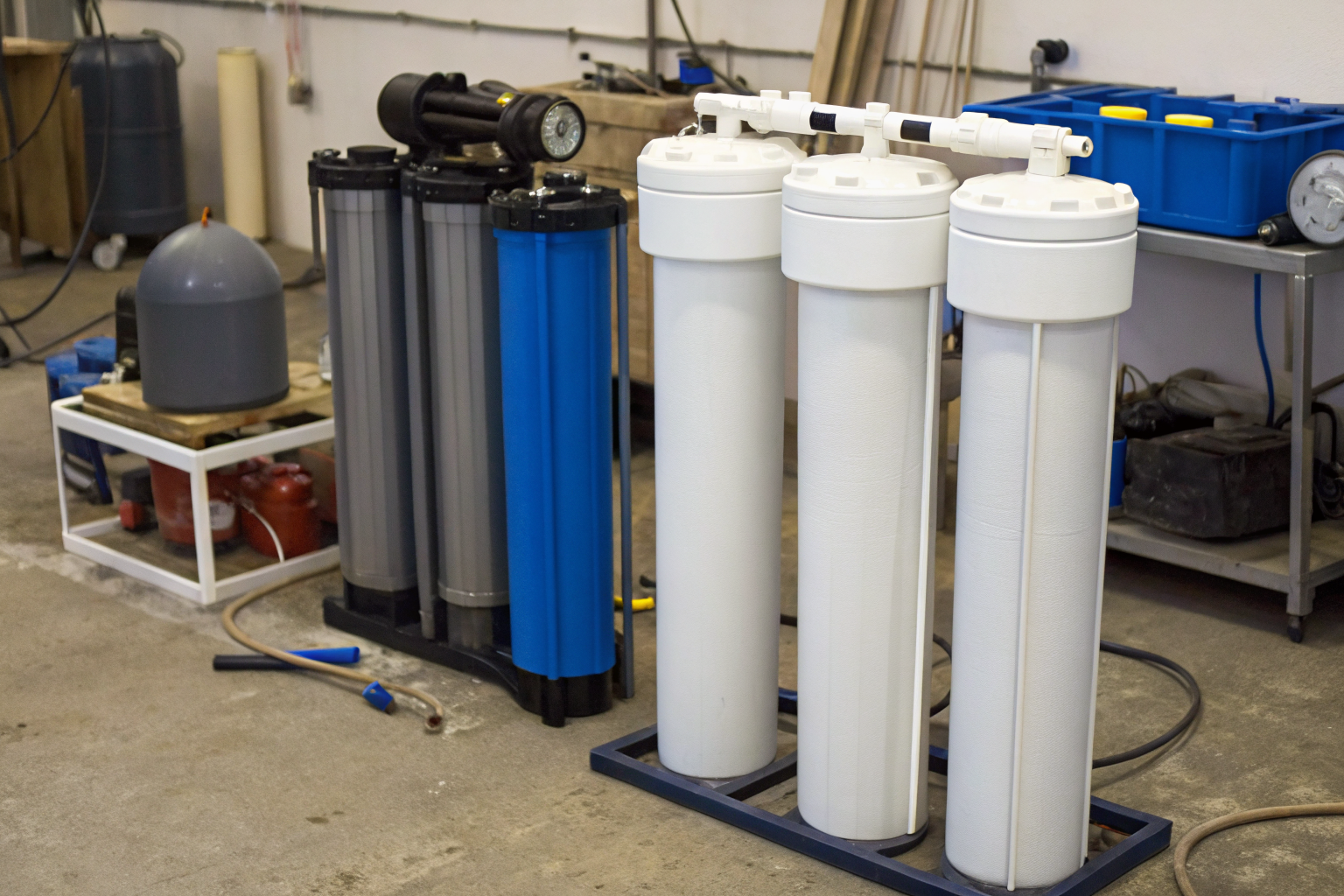
Installation complexity varies by system technology type and your home’s plumbing configuration. Simple systems need basic tools and skills, while complex systems require professional expertise.
| System Complexity | DIY Difficulty | Time Required | Professional Cost | Special Requirements |
|---|---|---|---|---|
| Basic Sediment/Carbon | Easy | 2-3 hours | $200-$400 | Standard pipe fittings |
| Iron Filtration | Moderate | 4-6 hours | $400-$800 | Drain line, backwash timer |
| UV Disinfection | Hard | 6-8 hours | $400-$800 | GFCI electrical, flow switch |
| Multi-stage Systems | Professional Only | 1-2 days | $800-$1,500 | Multiple utilities, permits |
Simple sediment filters require 2-3 hours DIY installation, while UV systems with electrical connections need professional installation averaging $400-800 labor. The complexity difference comes from utility connections and safety requirements.
Basic sediment and carbon systems use standard plumbing fittings and need only pipe cutting tools and wrenches. Install at your main water line after the pressure tank but before any branch lines. Most homeowners complete installation in one afternoon.
Iron filtration systems add drain line requirements for backwash cycles and timer controls for regeneration scheduling. These systems need dedicated floor drains or exterior discharge points that many homes lack. Professional installation handles drain line routing and backwash timer wiring.
UV disinfection requires GFCI electrical connections and flow switch wiring for safety shutoffs. Electrical codes mandate professional installation for these components. DIY electrical work voids warranties and creates insurance liability issues.
Multi-stage systems combine multiple technologies with complex control systems and require permits in most jurisdictions. Professional installation includes system commissioning, water testing, and warranty coverage that DIY installation cannot provide.
Which Whole House Systems Work Best for Common Well Water Problems?

Specific contaminant problems require targeted treatment approaches that address root causes, not just symptoms. Generic filtration misses the science behind effective treatment.
• Iron + Bacteria Combination: Iron filtration before UV disinfection removes iron food source that bacteria need to survive. Wells with iron above 3 ppm plus coliform bacteria need iron filtration before UV treatment, reverse order fails 80% of the time. Iron bacteria create biofilms that shield pathogens from UV light.
• Hydrogen Sulfide + Low pH: pH adjustment to 7.0+ before sulfur removal improves treatment efficiency by 70%. Acidic water chemistry prevents proper oxidation of hydrogen sulfide gas. Multi-stage systems with pH correction followed by iron/sulfur filtration handle this combination effectively.
• Hardness + Iron Staining: Water softening alone cannot remove iron staining above 0.3 ppm dissolved iron. Iron filtration before water softening prevents iron buildup on resin beads and maintains softener efficiency. Softener resin fouled with iron loses 50% of hardness removal capacity.
• Arsenic + Sediment Loading: Reverse osmosis removes 95%+ of arsenic but requires sediment pre-filtration below 5 microns. High sediment loads clog RO membranes and reduce arsenic removal efficiency. Pre-filtration extends membrane life from 6 months to 2+ years.
• Multiple Chemical Contaminants: Wells with PFAS, nitrates, and heavy metals need reverse osmosis as the core technology with pre-treatment for system protection. Carbon pre-filtration removes chlorinated compounds that damage RO membranes. UV post-treatment handles any bacterial contamination in storage tanks.
Water chemistry analysis determines treatment sequencing. Well water contaminant combinations interact in ways that affect treatment effectiveness. Single-stage systems work only for simple contamination profiles, uncommon in private wells with multiple contamination sources.
Treatment order matters. Iron bacteria treatment before UV disinfection. pH adjustment before iron removal. Sediment filtration before membrane systems. Wrong sequencing reduces treatment effectiveness and increases maintenance problems.
Frequently Asked Questions
Can I install a whole house water filter myself or do I need a professional?
Basic sediment and carbon filter systems with standard 1-inch connections can be DIY installed in 2-3 hours. UV disinfection systems require electrical connections and professional installation, while complex multi-stage systems need plumbing modifications that most homeowners can’t handle safely.
Do whole house water filters reduce water pressure in my home?
Properly sized systems maintain pressure, but undersized filters or clogged cartridges cause noticeable pressure drops. Size your system 20% above your calculated GPM needs and follow filter replacement schedules to maintain flow rates.
How often do I need to replace filters in a whole house system?
Sediment pre-filters need replacement every 3-6 months depending on your water quality, carbon filters last 6-12 months, and specialized media like iron removal filters require annual replacement. UV bulbs need replacement every 12 months regardless of usage.