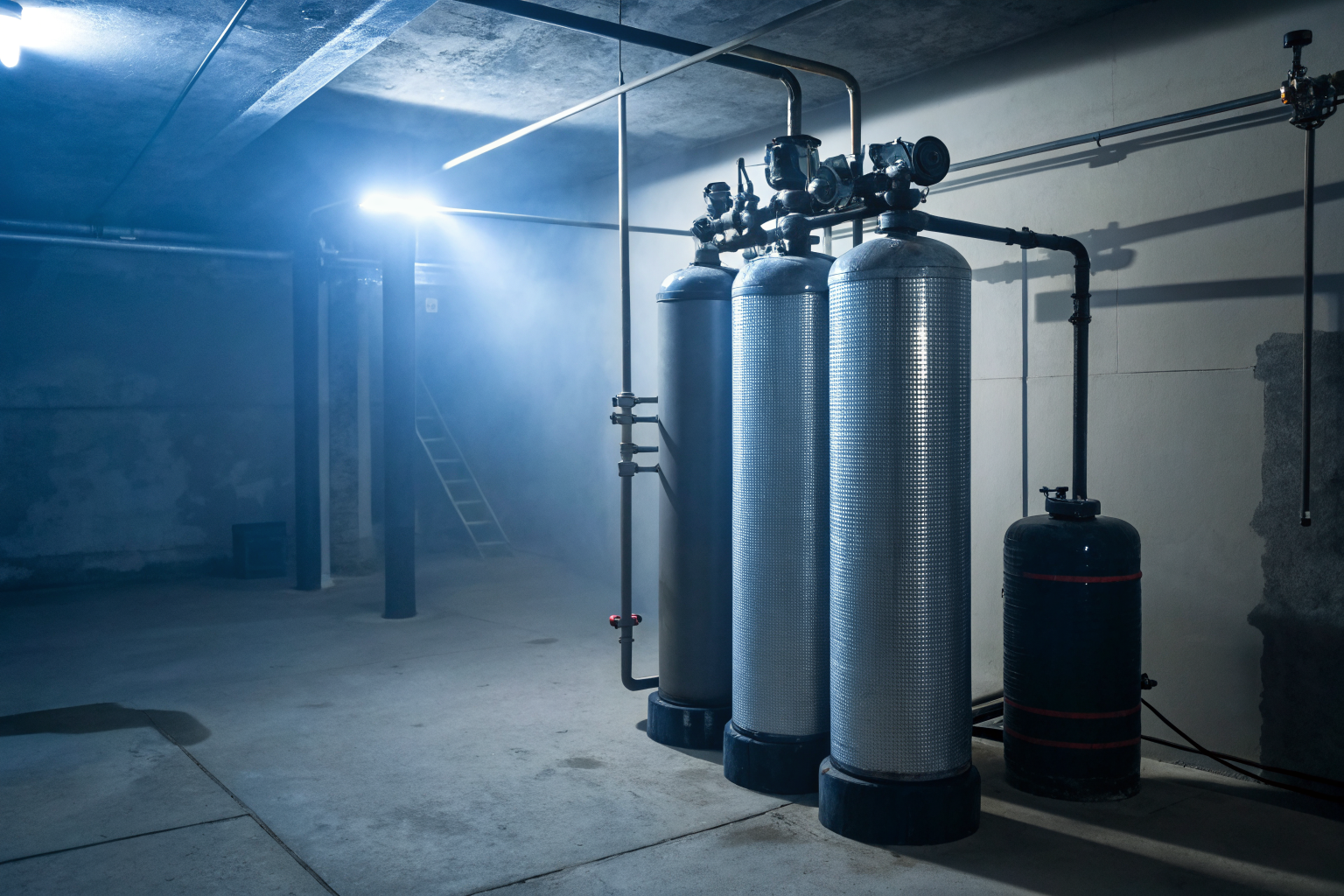
Well water softener maintenance demands more attention than city water because iron and manganese coat the resin beads, blocking sodium exchange and turning your expensive system into a worthless salt-eating machine.
Key Takeaways:
• Iron above 0.3 ppm shortens softener resin life by 50-70% without iron removal pre-treatment
• Well water softeners need salt bridge checks every 6-8 weeks versus 3-4 months for city water
• Resin bed cleaning every 3-6 months prevents iron fouling that standard regeneration cycles can’t remove
What Makes Well Water Harder on Your Softener Than City Water?
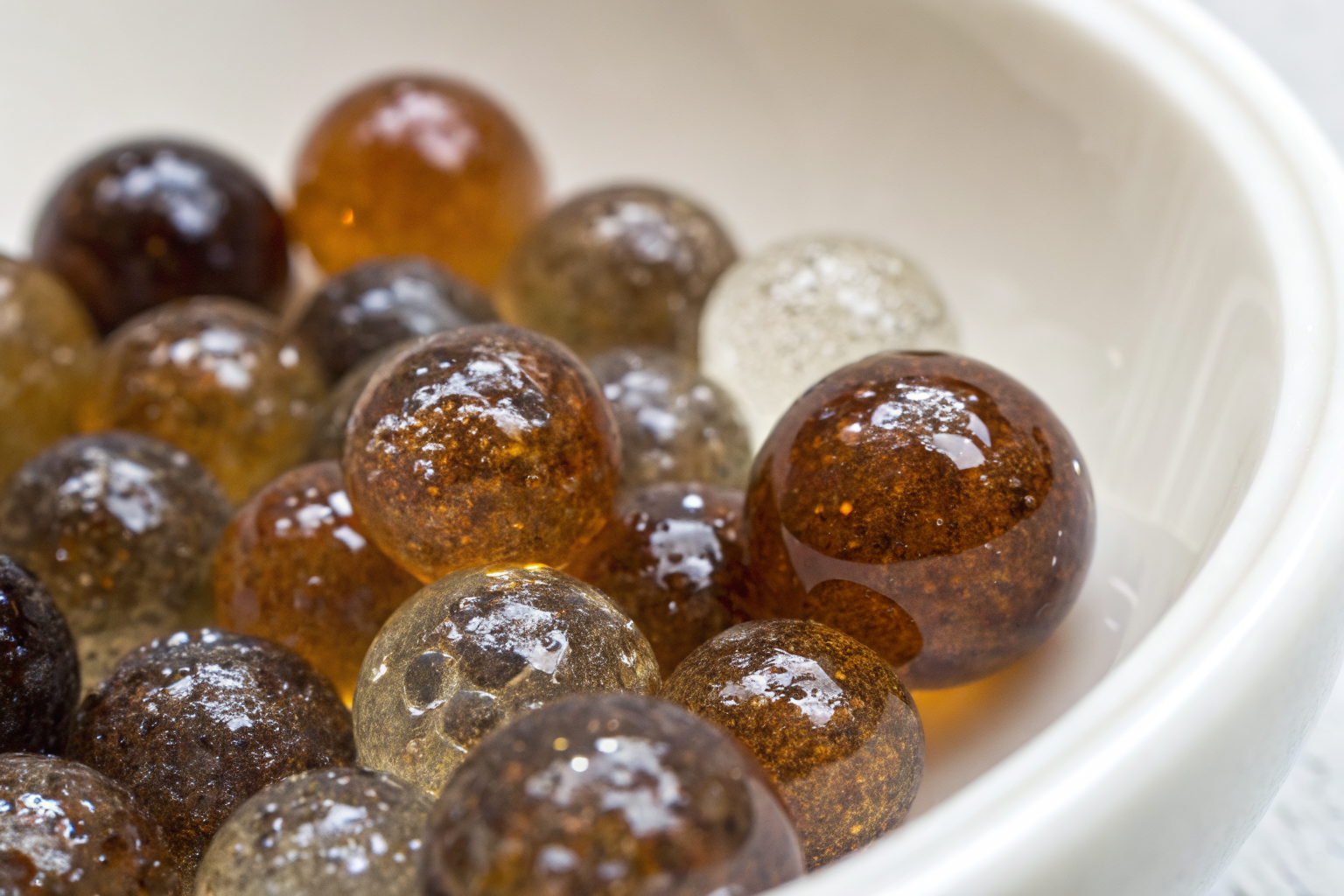
Iron fouling is the process where dissolved iron and manganese in well water coat resin beads with a metallic film. This means your softener loses the ability to exchange calcium and magnesium ions for sodium ions, which is literally its only job.
City water goes through municipal treatment plants that remove iron and manganese before it reaches your home. Your softener sees clean, pre-treated water. Well water hits your system raw, carrying whatever minerals your ground conditions produce.
The resin bed contains millions of tiny plastic beads with negative charges that attract positive calcium and magnesium ions. Iron and manganese also carry positive charges, but they stick to the resin surface like glue instead of washing away during regeneration. Once iron coats 20-30% of the resin surface, your softener starts failing.
Standard maintenance schedules assume city water conditions. They don’t account for the iron buildup that makes well water systems fail twice as fast. Iron above 0.3 ppm reduces resin capacity by 15-30% within 6 months if you follow city water maintenance timing.
Manganese contamination creates the same problem but worse. Manganese oxide forms a harder coating than iron oxide, and it’s nearly impossible to remove once it bonds to the resin surface.
How Often Should You Check Your Salt Level and Refill?
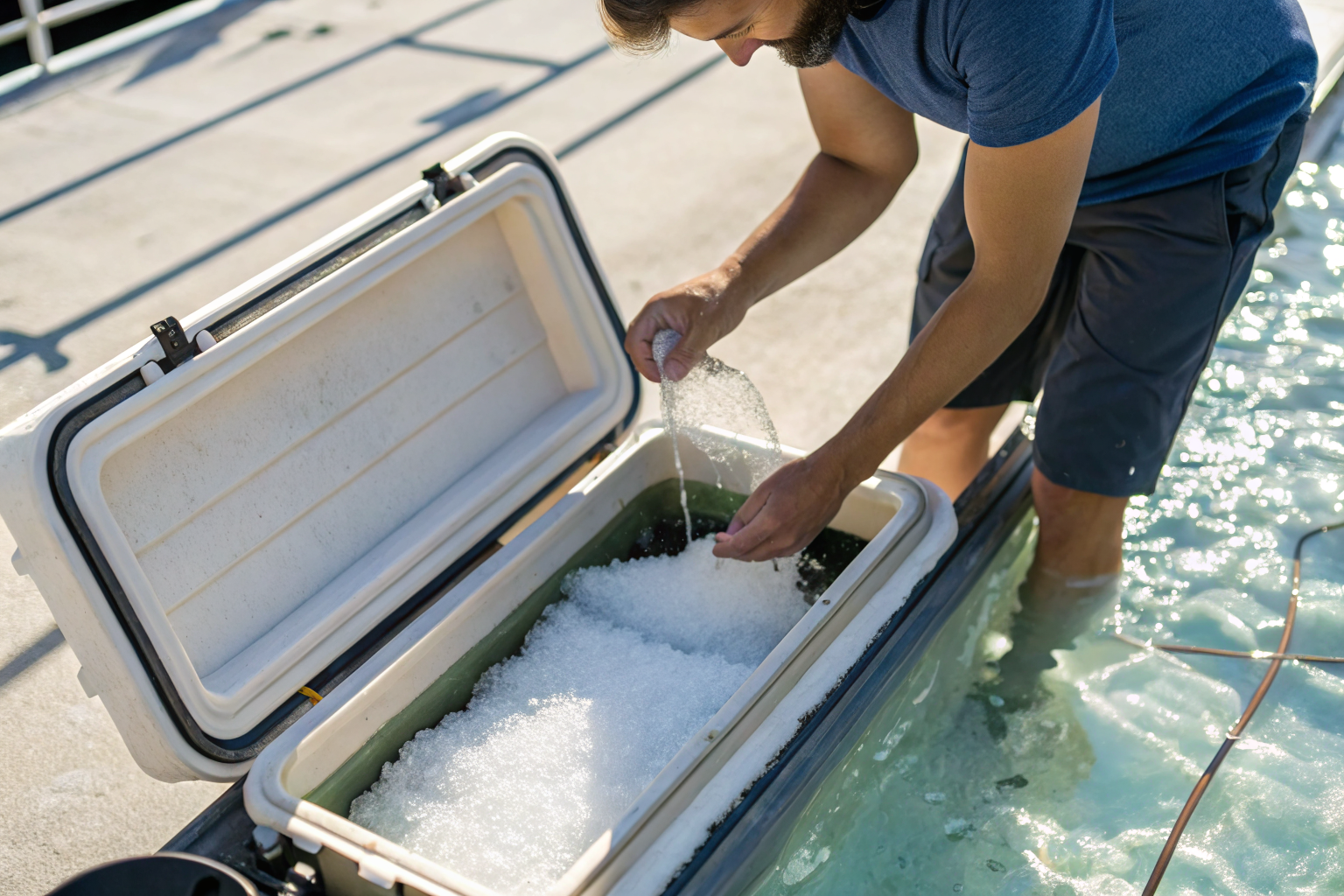
Well water softeners consume salt faster and form salt bridges more frequently than city water systems.
Check salt levels every 6-8 weeks instead of quarterly. Open the brine tank and look for salt crystals above the water line.
Test for salt bridges by pushing a broomstick down through the salt. If it hits a hard layer 6-12 inches down, you have a salt bridge blocking brine flow.
Break salt bridges immediately using a wooden handle or PVC pipe. Never use metal tools that can damage the tank liner.
Fill the tank when salt drops to 6 inches above the water level. Don’t wait until it’s empty or let it overflow the brine well.
Use iron-out salt if your iron exceeds 0.5 ppm. Regular salt works for low-iron wells, but iron-out additives help prevent resin fouling.
Add salt in winter when regeneration increases. Cold weather makes your softener work harder, and you’ll use 20-30% more salt during heating season.
Salt bridges form 40% faster in wells with iron above 1.0 ppm because iron particles provide nucleation points for crystal formation. The bridge blocks brine flow during regeneration, leaving your resin bed dirty and your water hard.
Check your system more often during summer if your well chemistry changes seasonally. Some wells show higher iron during dry periods when the water table drops.
Well Water Softener Maintenance Schedule by Iron Level

Your iron test results determine how often you need to perform each maintenance task.
| Iron Level (ppm) | Salt Check | Resin Cleaning | Performance Test | Resin Replacement |
|---|---|---|---|---|
| 0-0.3 (Low) | Every 8 weeks | Every 6 months | Monthly | 8-10 years |
| 0.3-1.0 (Moderate) | Every 6 weeks | Every 4 months | Bi-weekly | 6-8 years |
| 1.0-3.0 (High) | Every 4 weeks | Every 2 months | Weekly | 4-6 years |
| 3.0+ (Very High) | Weekly | Monthly | Daily spot checks | 2-4 years |
Wells with 2+ ppm iron need resin cleaning every 6-8 weeks to maintain 80% efficiency. Skip the cleaning schedule and your softener capacity drops below 50% within 3-4 months.
One thing I should mention: these schedules assume you’re not running pre-filtration. An iron filter before your softener extends everything in this table by 50-100%.
Seasonal variations matter too. If your well shows higher iron during summer drawdown periods, increase your maintenance frequency from June through September. Your water test results from different seasons will show you the pattern.
How Do You Clean Iron Fouling from Softener Resin?
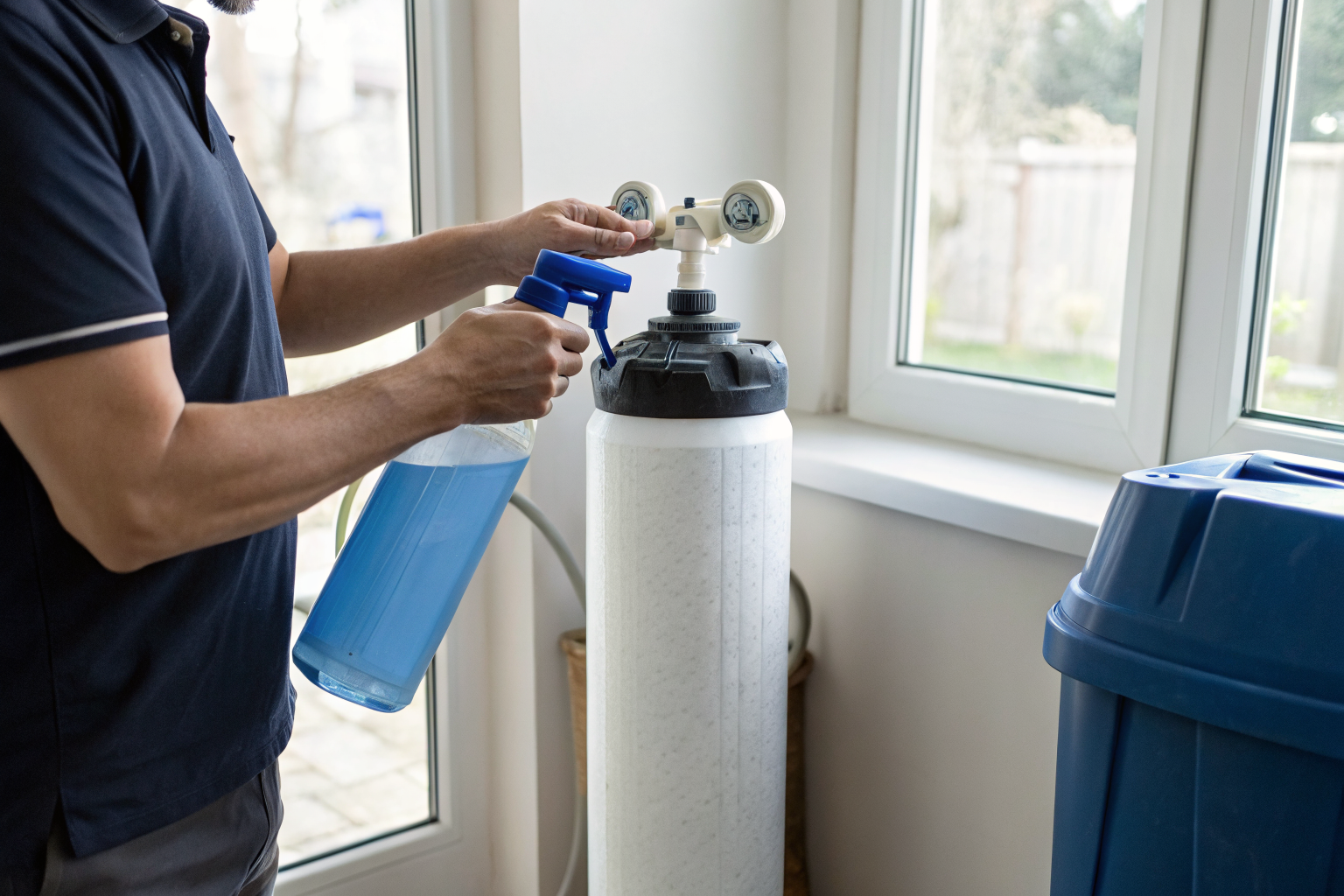
Resin cleaning removes iron deposits that standard salt regeneration can’t touch.
Buy a commercial iron resin cleaner from a water treatment supplier. Brands like Pro Products Iron-Out or Res Care work better than DIY vinegar solutions.
Set your softener to manual regeneration mode. You need to control the timing for the cleaning cycle.
Add the cleaner to the brine well according to package directions. Most products use 1-2 cups per cubic foot of resin.
Run a complete regeneration cycle with the cleaner in the system. The cleaning solution flows through the resin bed during the brine and rinse phases.
Test your water hardness 24 hours after cleaning. If it’s still above 1-2 grains, repeat the cleaning process.
Run an extra rinse cycle to remove any cleaner residue. You don’t want chemical taste in your water.
Resin cleaning restores 60-85% of original capacity when done before iron coating exceeds 30% of bead surface. Wait too long and the iron forms a permanent bond that no cleaner can remove.
Safety warning: Never mix different cleaners or add bleach to iron cleaners. Some combinations produce toxic chlorine gas.
Actually, here’s something most people miss: if your resin looks black or dark brown, you probably have iron bacteria, not just iron staining. Iron bacteria requires shock chlorination of your entire well system, not just resin cleaning.
What Settings Need Adjustment for Well Water?
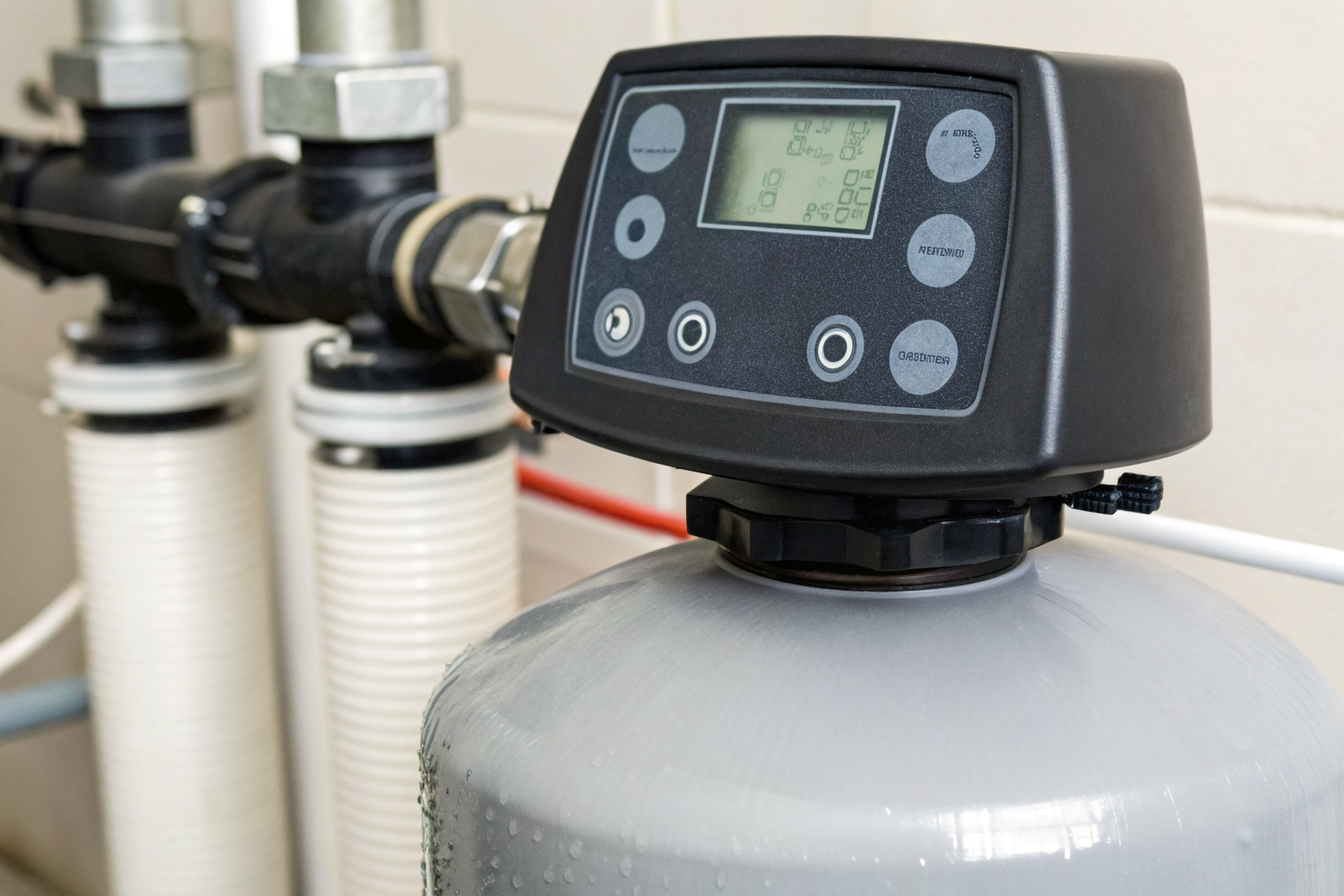
Well water chemistry requires different softener programming than the factory defaults designed for city water.
• Add 4-5 grains hardness compensation for every 1 ppm of iron. If your water tests 10 grains hard with 1 ppm iron, program the softener for 15 grains.
• Increase regeneration frequency by 25-50% for iron above 0.5 ppm. Instead of regenerating every 1,200 gallons, set it for 800-900 gallons.
• Use a longer rinse cycle if your water tastes salty after regeneration. Add 2-4 minutes to the fast rinse phase.
• Reduce the flow rate setting if you have manganese above 0.1 ppm. Slower flow gives the resin more contact time to grab manganese ions.
• Program seasonal adjustments if your well chemistry changes. Some wells need different settings in summer versus winter.
The hardness compensation is critical. Iron uses up exchange sites on the resin just like calcium, but most softeners don’t account for it in their capacity calculations. Without compensation, your system regenerates too infrequently and you get breakthrough hardness.
Flow rate matters more with well water because iron and manganese need longer contact time than calcium. If your softener is sized for 10 gallons per minute but you’re pushing 15 GPM through it, you’ll get iron breakthrough even with clean resin.
How Do You Monitor Your Well Water Softener Performance?

System performance monitoring prevents costly repairs and catches problems before they destroy your resin bed.
Test your water hardness weekly using soap test strips or a digital TDS meter. Softened water should read 0-1 grains hardness. If you’re getting 3+ grains, something’s wrong with your system.
Check for iron breakthrough monthly by filling a clear glass with hot water and letting it sit for 30 minutes. Any red, brown, or yellow tinting means iron is getting through your softener.
Monitor salt usage patterns. If you’re suddenly using 50% more salt without changing your water consumption, you probably have resin fouling or a stuck valve.
Schedule annual professional inspections for wells with iron above 1.0 ppm. A technician can measure resin capacity, test valve operation, and catch problems you’ll miss.
Watch for these warning signs: metallic taste, rusty stains returning, salt bridges forming monthly instead of quarterly, or regeneration cycles running longer than normal.
Softener efficiency drops below 70% when iron fouling blocks more than 25% of resin exchange sites. At that point, you’re paying for salt and electricity to run a system that barely works.
One caveat: don’t rely on soap lather tests if you have iron above 2 ppm. Iron interferes with soap performance even in soft water, giving you false readings.
Frequently Asked Questions
Can I use regular water softener salt with well water that has iron?
Yes, but iron-out salt works better for wells with 0.5+ ppm iron because it contains additives that help prevent resin fouling. Regular salt works fine for low-iron wells but won’t prevent the iron buildup that shortens resin life.
How long does softener resin last with well water versus city water?
Well water resin lasts 5-8 years versus 10-15 years for city water, depending on iron and manganese levels. Wells with iron above 1.0 ppm can destroy resin in 3-5 years without proper maintenance and pre-filtration.
Should I install an iron filter before my water softener?
Yes, if your iron exceeds 3-4 ppm or you have iron bacteria. Pre-filtration removes most iron before it reaches the softener resin, extending resin life from 5 years to 10+ years and reducing maintenance frequency by 50-60%.