PFAS well water treatment confuses most private well owners because they assume all removal technologies work the same. They don’t. PFAS contamination in private wells affects 16.5 million Americans, yet most choose the wrong treatment technology because they don’t understand which PFAS compounds their system removes.
Key Takeaways:
• Reverse osmosis removes 95%+ of PFAS compounds while activated carbon removes only 70-90% depending on carbon type and contact time
• NSF 53 and NSF 58 certifications specify which PFAS compounds each system removes, NSF 401 covers only 15 PFAS chemicals
• Granular activated carbon filters require replacement every 6-12 months for PFAS removal while RO membranes last 2-3 years
What PFAS Removal Technologies Actually Work for Well Water?
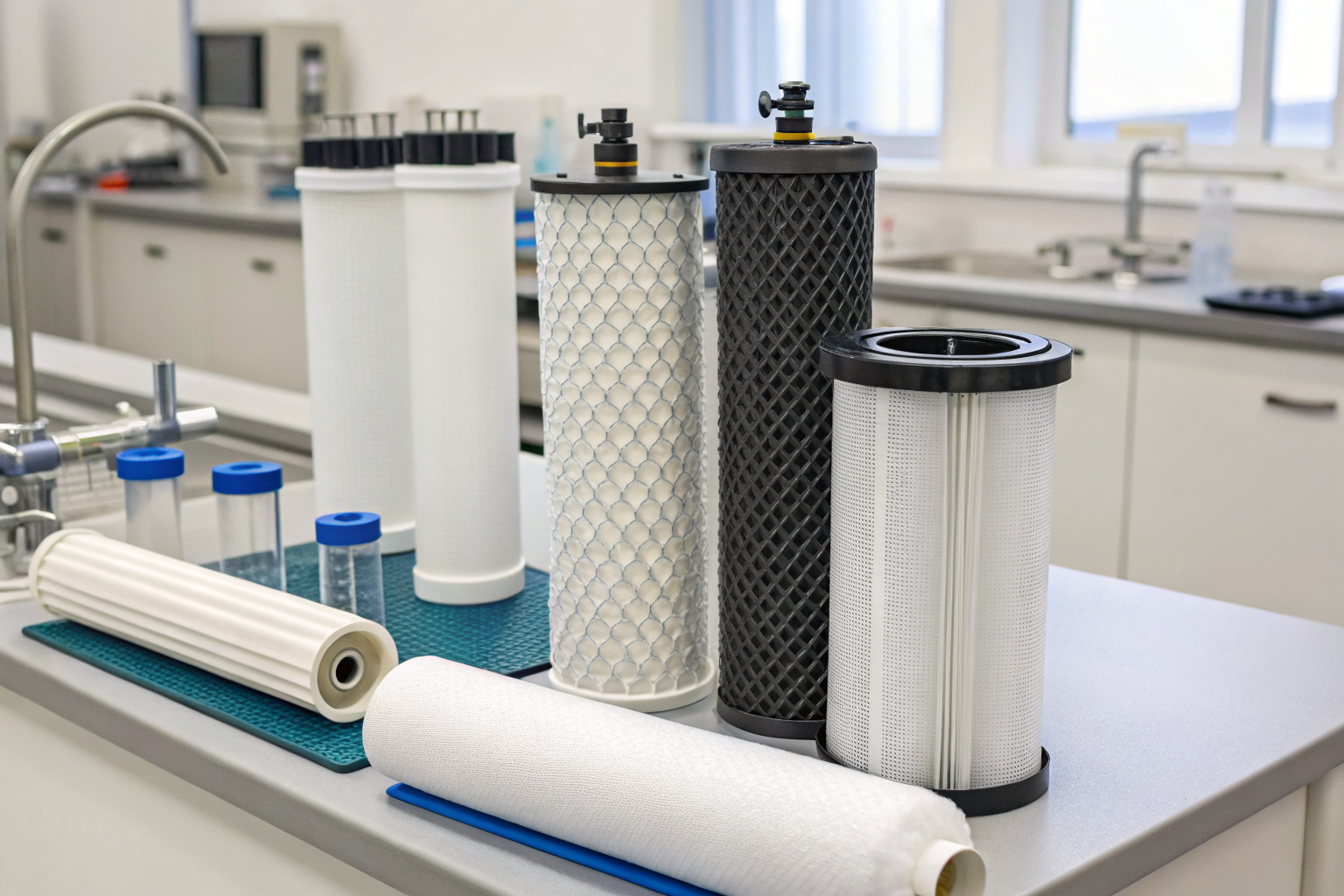
PFAS removal technology is any system that extracts perfluorinated chemicals from water through physical, chemical, or membrane barriers. This means not every water treatment system removes PFAS, you need specific technologies designed for these persistent compounds.
Three technologies remove PFAS at 70%+ efficiency in residential applications. Activated carbon filter systems use specially treated carbon media to adsorb PFAS molecules onto the carbon surface. The effectiveness depends on carbon type, contact time, and PFAS compound structure. Reverse osmosis system technology forces water through semi-permeable membranes that physically block PFAS molecules from passing through. RO works regardless of PFAS compound type or chain length.
Ion exchange resin technology swaps PFAS molecules for harmless ions like chloride. However, ion exchange systems require careful regeneration and disposal of PFAS-loaded resin, making them less practical for private well owners. Most residential ion exchange systems focus on hardness removal, not PFAS treatment.
For private wells, activated carbon and reverse osmosis dominate the market. Chemical oxidation injection and advanced treatment methods work in municipal systems but require professional operation beyond what well owners can manage.
Activated Carbon vs Reverse Osmosis vs Ion Exchange: PFAS Removal Effectiveness
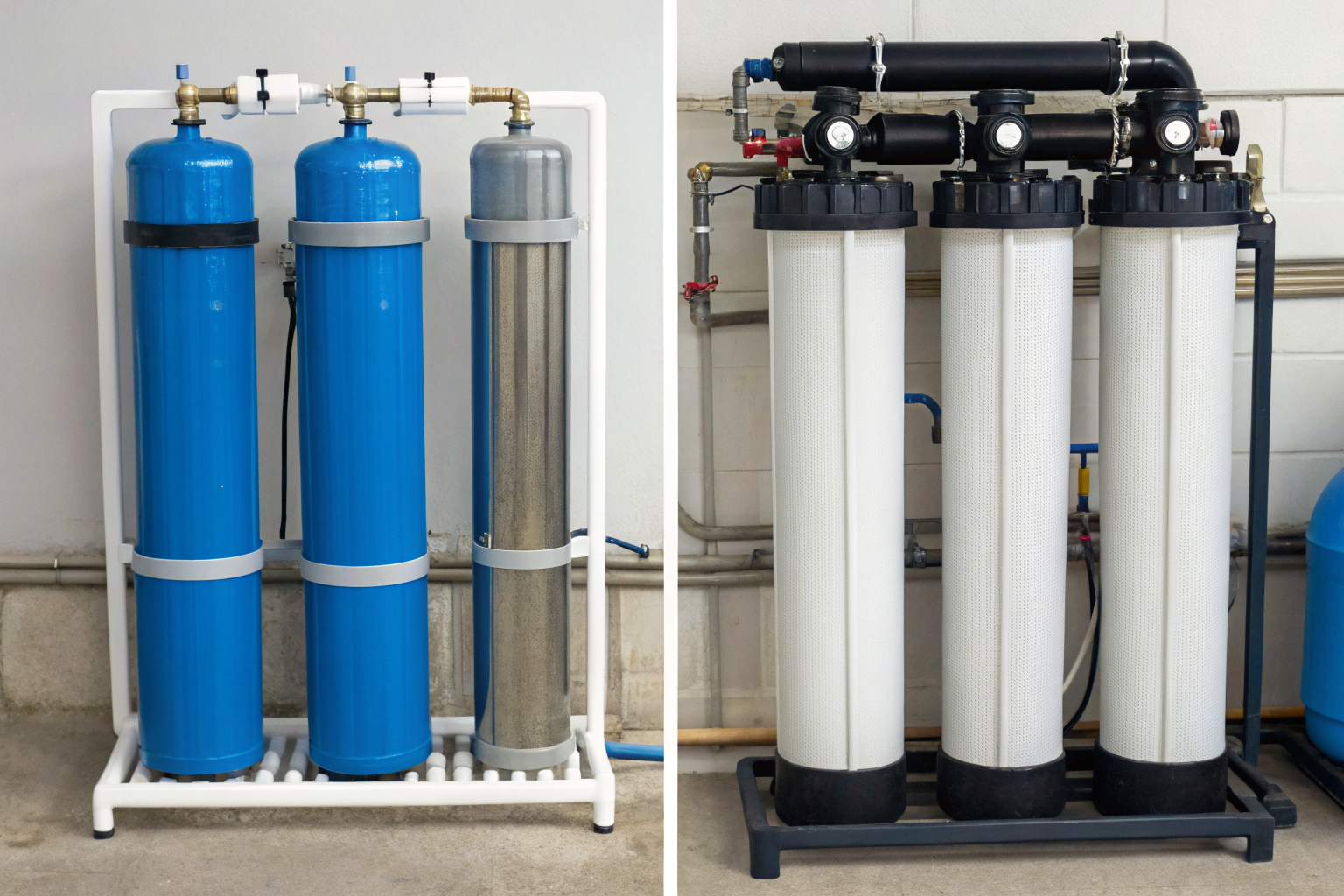
Treatment technology performance varies dramatically based on PFAS compound structure and system design. RO removes 95%+ of all PFAS while GAC effectiveness drops from 90% for long-chain to 50% for short-chain PFAS.
| Technology | PFOA/PFOS Removal | Short-Chain PFAS | Contact Time Required | Flow Rate Impact |
|---|---|---|---|---|
| Granular Activated Carbon | 85-95% | 50-70% | 10-15 minutes | Minimal |
| Carbon Block | 90-98% | 60-80% | 5-8 minutes | 50% reduction |
| Reverse Osmosis | 95-99% | 95-99% | Immediate | 75% reduction |
| Ion Exchange | 90-95% | 85-90% | 2-5 minutes | Minimal |
Activated carbon filter effectiveness depends on carbon source and activation method. Coconut shell carbon outperforms coal-based carbon for PFAS adsorption. Carbon block filters provide better contact time than granular systems, improving removal rates for difficult compounds.
Reverse osmosis system performance stays consistent across all PFAS compounds because the membrane physically blocks molecules based on size, not chemical attraction. PFAS molecules are too large to pass through RO membranes, regardless of their carbon chain length or functional groups.
GAC media loses effectiveness as PFAS compounds saturate the carbon surface. Short-chain PFAS like GenX and PFBS have weaker attraction to carbon, allowing breakthrough even in fresh carbon filters. Long-chain compounds like PFOA and PFOS bind more strongly, extending filter life.
Which PFAS Compounds Does Your Treatment System Actually Remove?
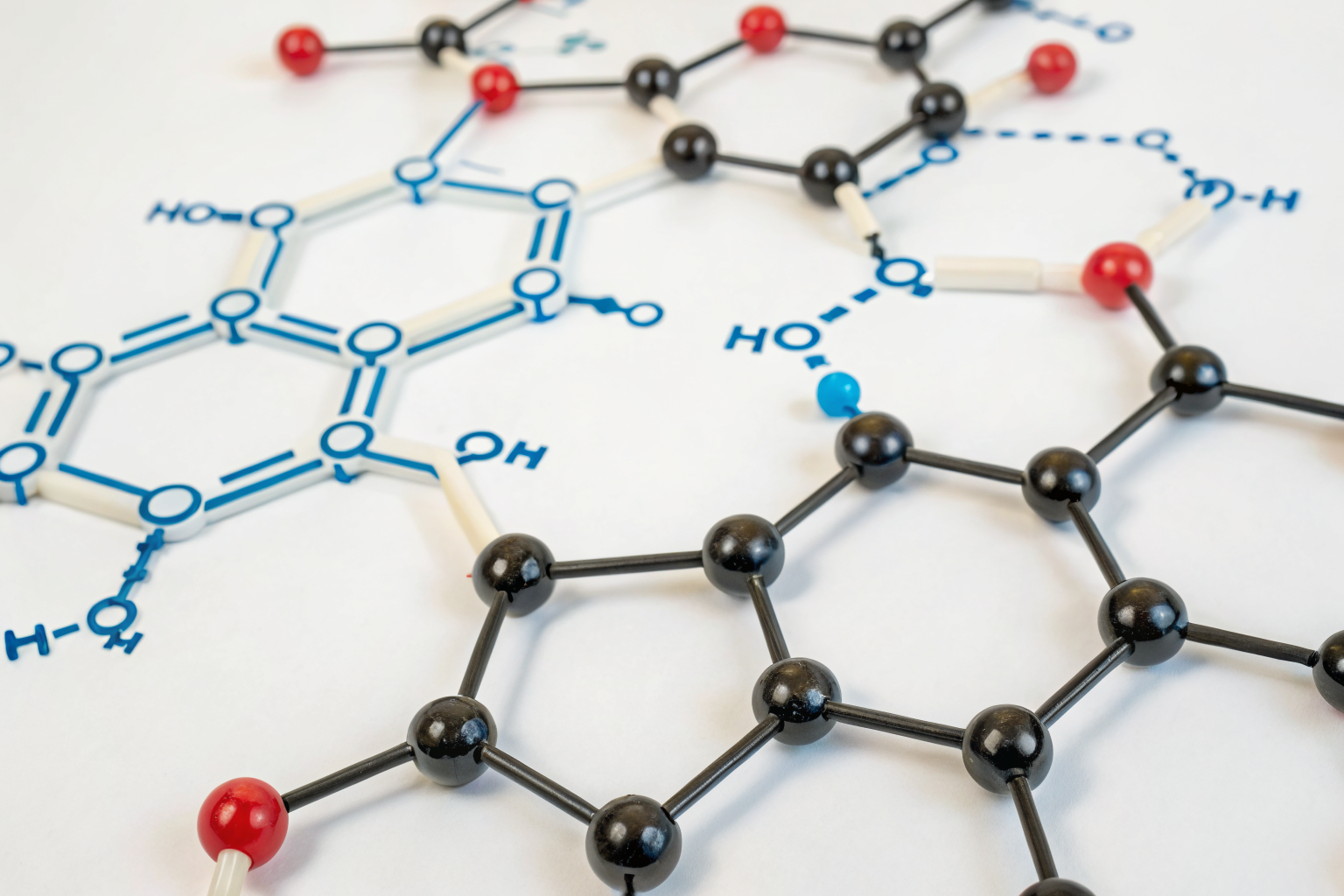
PFAS compound structure determines treatment effectiveness across all removal technologies. Short-chain PFAS compounds under C6 show 30-50% lower removal rates across all treatment technologies.
Carbon chain length affects how PFAS molecules interact with treatment media. PFOA removal and PFOS removal rates stay high because these long-chain compounds bind strongly to activated carbon surfaces. Their 8-carbon chains provide multiple attachment points for carbon adsorption.
Short-chain PFAS compounds like PFBA, PFBS, and GenX present different challenges. These molecules have fewer carbon atoms, reducing their attraction to activated carbon. They also move faster through filter media, allowing breakthrough before complete removal occurs.
Reverse osmosis systems show minimal variation in removal rates between long and short-chain PFAS. The membrane barrier blocks molecules based on size, and even the smallest PFAS compounds exceed the pore size of RO membranes. This makes RO the most reliable technology for treating unknown PFAS mixtures.
Ion exchange performance varies by resin type and regeneration frequency. PFAS compounds can displace other ions on the resin, but resin capacity decreases as PFAS molecules accumulate. Some short-chain PFAS show reduced attraction to standard anion exchange resins.
NSF Certification Standards: What PFAS Claims Actually Mean
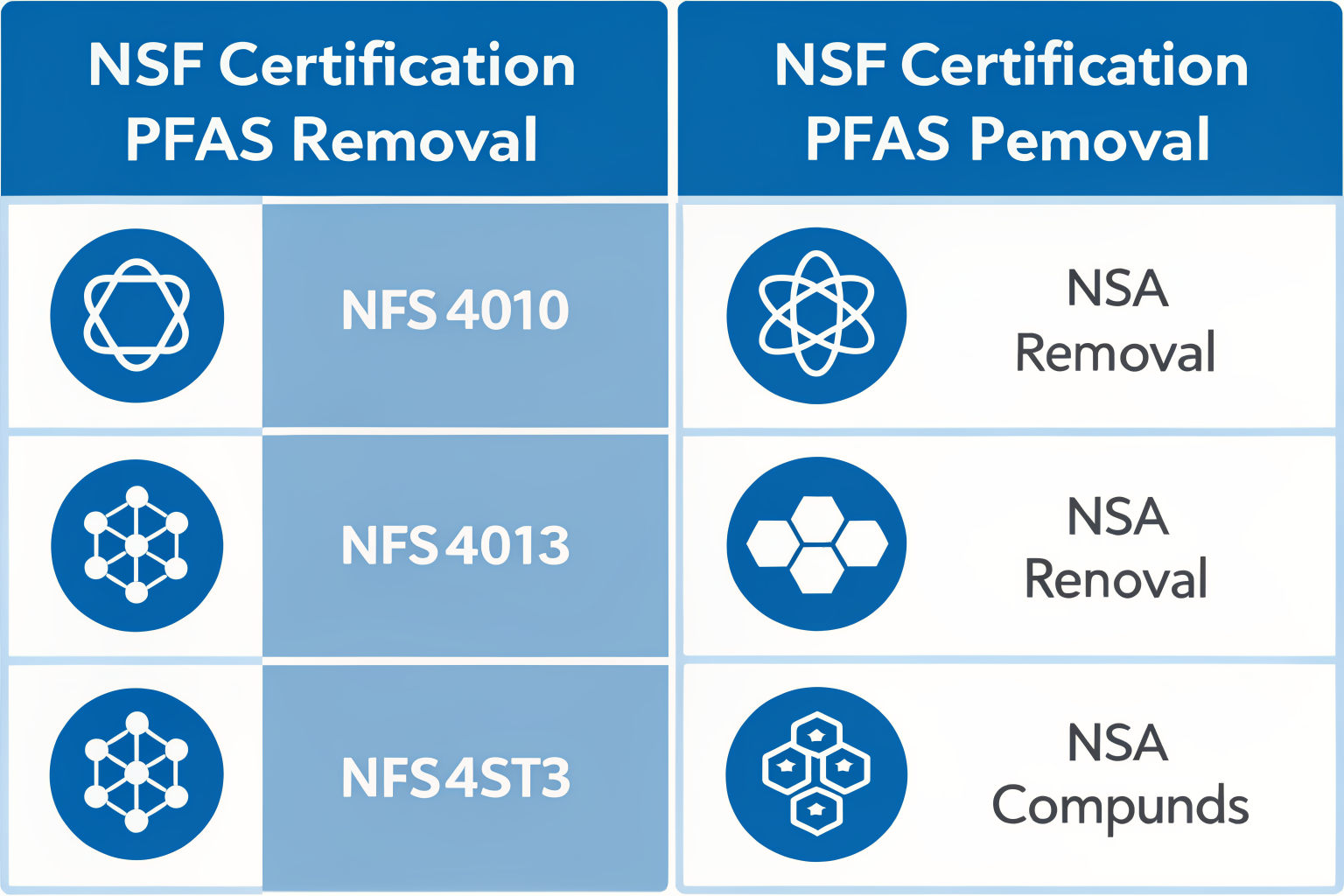
NSF certification validates PFAS removal claims through third-party testing under controlled conditions. NSF 401 tests only 15 PFAS compounds while NSF 53 covers the full spectrum of perfluorinated chemicals.
Here’s what each certification means for well water treatment:
NSF 53 standard covers health-effect contaminants including PFOA and PFOS removal at specific flow rates and filter capacities. Systems must maintain removal performance throughout the filter’s rated life.
NSF 401 certification tests 15 emerging contaminants including PFOA, PFOS, and several short-chain PFAS compounds. This standard focuses on pharmaceuticals and personal care products beyond just PFAS.
NSF 58 certification applies to reverse osmosis systems and includes testing for PFAS reduction along with total dissolved solids and other contaminants.
Manufacturer claims without NSF backing may use limited testing or favorable conditions that don’t reflect real-world performance in private wells.
NSF testing uses challenge water with known PFAS concentrations and measures removal rates at various flow rates. The certification specifies which compounds the system removes and at what efficiency levels. Without certification, you’re trusting manufacturer data that may not apply to your well water conditions.
How Often Do You Replace PFAS Treatment System Components?
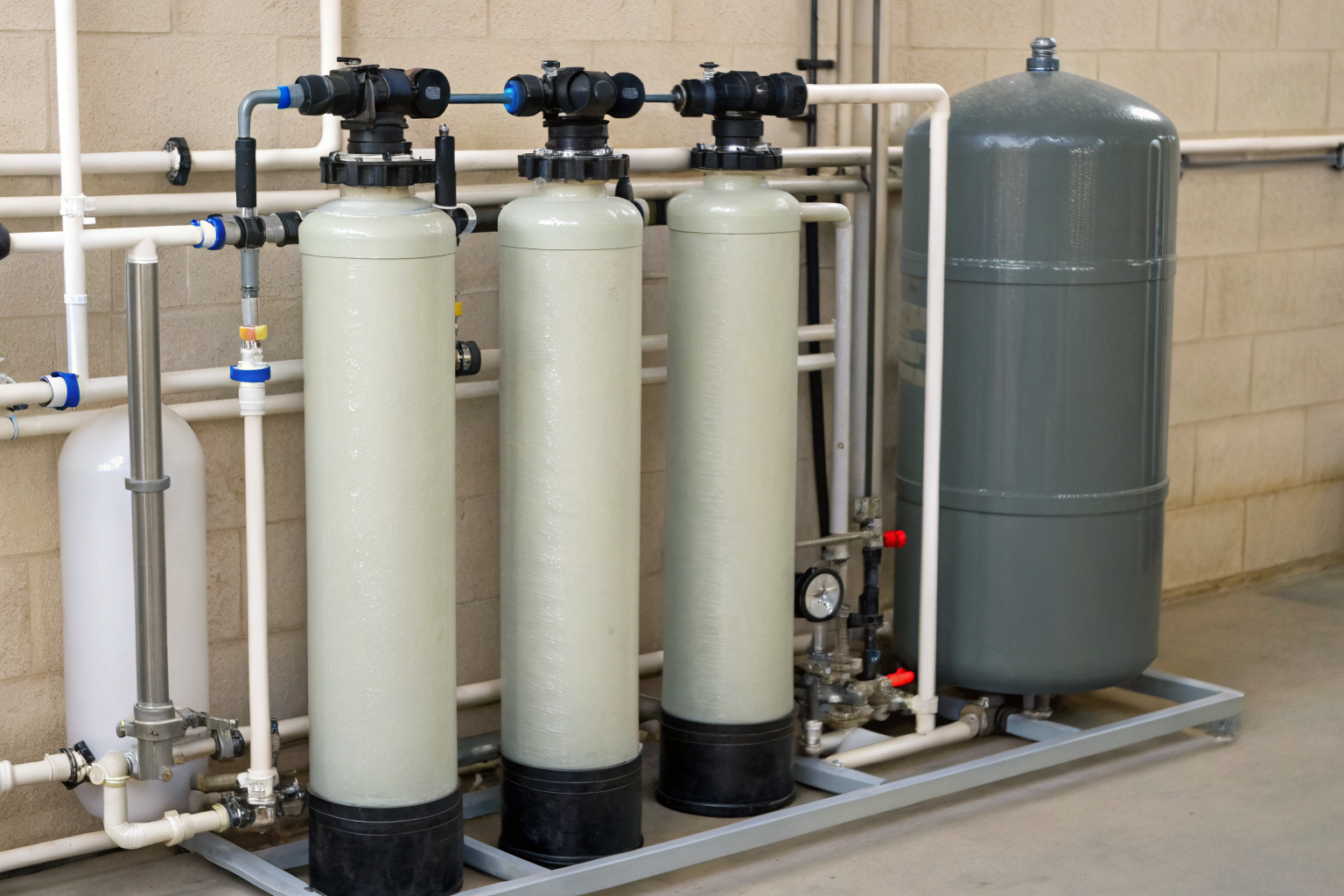
Filter media requires replacement at specific time intervals based on PFAS contamination levels and water usage. PFAS-loaded activated carbon requires replacement 2-3x more frequently than carbon used for chlorine removal.
Follow these replacement schedules for PFAS treatment systems:
Replace granular activated carbon filters every 6-12 months depending on PFAS concentration and daily water usage. Higher PFAS levels saturate carbon faster, reducing filter life.
Change carbon block filters every 6 months for PFAS removal regardless of taste or odor performance. Carbon may still remove chlorine while allowing PFAS breakthrough.
Replace RO membranes every 2-3 years for PFAS treatment systems. Pre-filtration extends membrane life by removing sediment and chlorine that damage the membrane surface.
Monitor system performance with periodic PFAS testing rather than relying on filter life estimates. Breakthrough can occur before the rated filter life in high-contamination wells.
Replace pre-filters and post-filters on schedule even if the main treatment component has remaining life. Pre-filter failure can damage downstream components.
Carbon filter replacement costs vary from $50-200 per filter change depending on system size and carbon type. RO membrane replacement costs $100-300 but occurs less frequently. Calculate cost per gallon including all replacement components to compare system economics.
Point-of-Use vs Whole House: Where Should You Install PFAS Treatment?

Installation location affects treatment cost and effectiveness based on water demand and PFAS exposure routes. Whole house PFAS treatment costs 4-6x more than point-of-use due to higher flow rate requirements and filter capacity.
| Feature | Point-of-Use System | Whole House Treatment |
|---|---|---|
| Initial Cost | $200-800 | $1,200-4,000 |
| Filter Replacement Cost | $100-200/year | $400-800/year |
| Flow Rate | 0.5-1.0 GPM | 5-15 GPM |
| Water Demand Coverage | Kitchen sink only | All household uses |
| Installation Complexity | DIY friendly | Professional required |
| PFAS Exposure Routes | Drinking/cooking water | All water contact |
Point-of-use system installation makes sense when PFAS exposure occurs through ingestion. Install under the kitchen sink or at a dedicated drinking water tap. This approach treats 5-10% of household water usage while protecting against the primary exposure route.
Whole house treatment addresses PFAS exposure through dermal contact and inhalation during showering. However, the EPA hasn’t established safe levels for dermal PFAS exposure, making the health benefit unclear compared to the cost increase.
Water demand determines system sizing requirements. Point-of-use systems handle 0.5-1.0 gallons per minute while whole house systems need 5-15 GPM capacity. Higher flow rates require larger filter housings and more frequent media replacement.
Frequently Asked Questions
Can a regular carbon filter remove PFAS from well water?
Standard activated carbon filters remove some PFAS compounds but not others. You need carbon designed for PFAS removal with NSF 53 or NSF 401 certification to ensure effectiveness against the full spectrum of PFAS chemicals. Regular carbon filters focus on chlorine and taste removal, not PFAS adsorption.
How much does PFAS treatment cost for a private well?
Point-of-use PFAS treatment systems cost $200-800 while whole house systems range from $1,200-4,000. Annual replacement costs add $100-400 depending on your water usage and PFAS contamination levels. Higher PFAS concentrations require more frequent filter changes, increasing operating costs.
Do water softeners remove PFAS from well water?
Water softeners do not remove PFAS compounds. Softeners use ion exchange to remove calcium and magnesium, but PFAS chemicals require different treatment technologies like activated carbon or reverse osmosis. The resin in water softeners isn’t designed to attract or hold PFAS molecules.