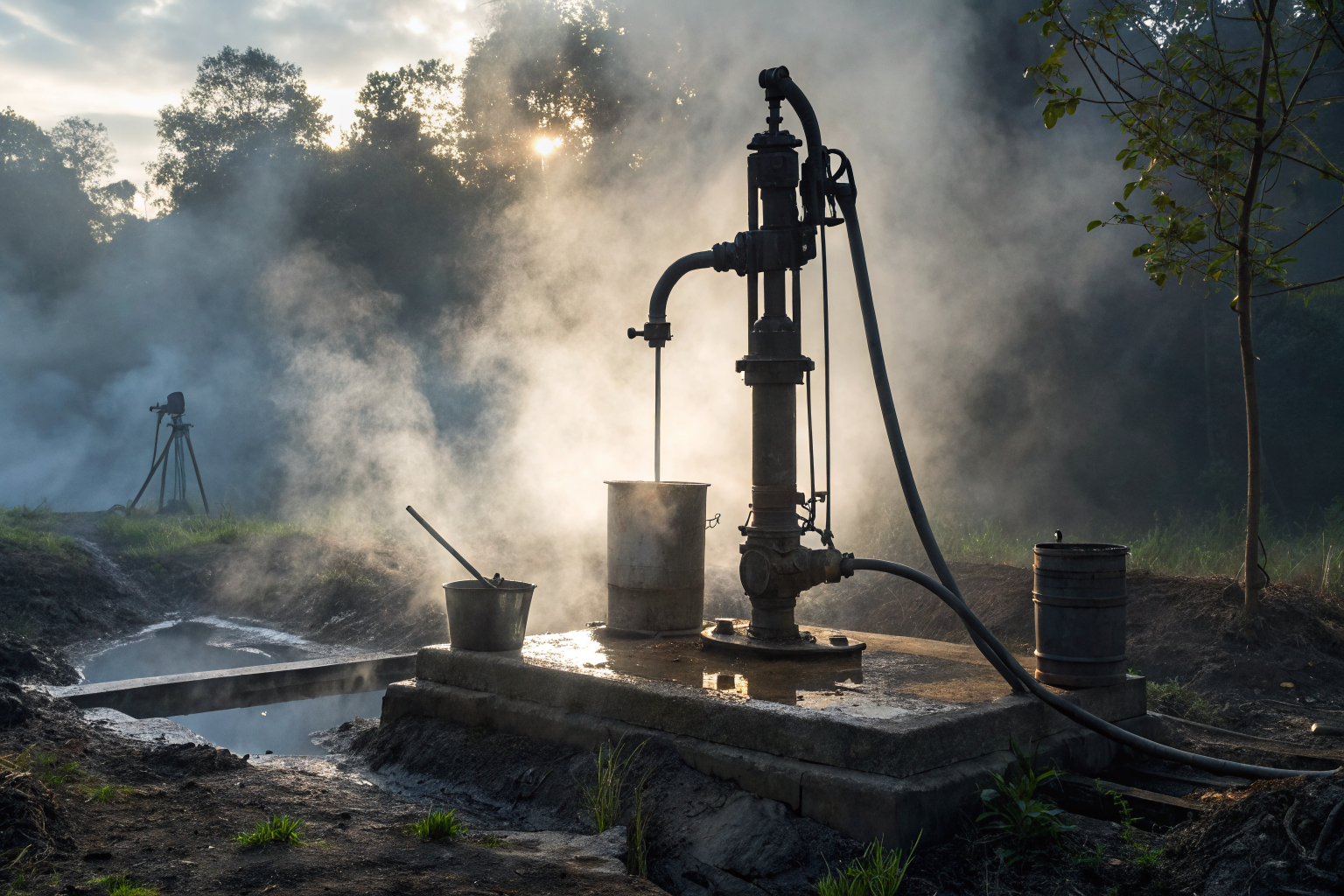
Understanding how well water system works becomes critical when you’re standing in ankle-deep water at 2 AM because something failed. Most homeowners understand their plumbing but have zero clue how water actually gets from 200 feet underground to their faucet.
Key Takeaways:
- Your well system has 6 critical components, pump, pressure tank, pressure switch, casing, cap, and pitless adapter, and failure of any one shuts down your entire water supply
- Submersible pumps handle 85% of residential wells deeper than 25 feet, while jet pumps work for shallow wells under 25 feet
- Pressure tanks cycle every 2-4 minutes during normal use, storing 20-80 gallons under 30-50 PSI to prevent pump short-cycling
What Are the Essential Components of a Private Well System?
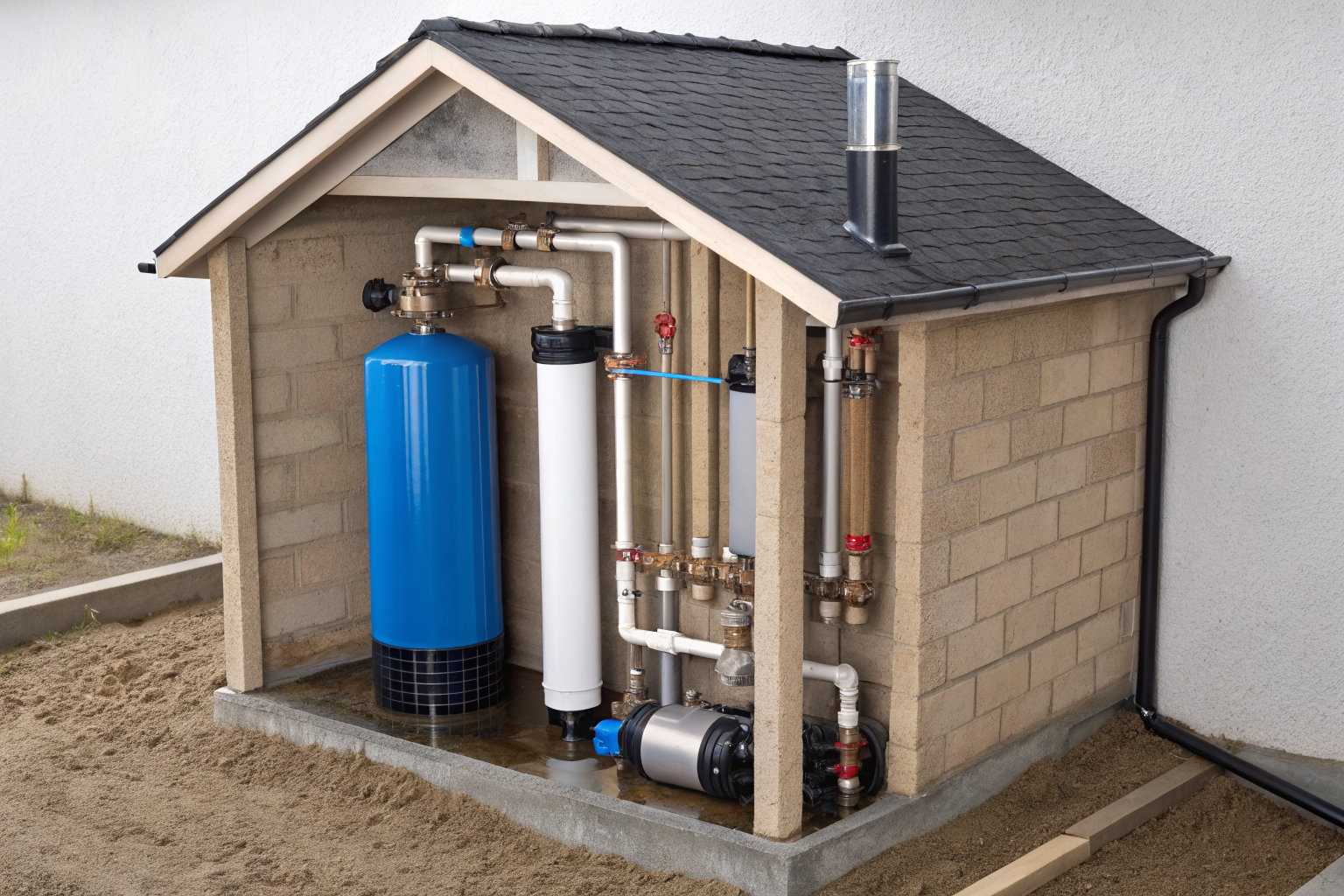
A well system contains six essential components working together to deliver water from your aquifer to your house. Each component serves a specific function, and understanding what each part does helps you diagnose problems before they become emergencies.
The well pump system sits at the bottom of your well, pushing water up through the casing. The pressure tank stores water under pressure to prevent the pump from cycling constantly. A pressure switch controls when the pump turns on and off based on water demand.
| Component | Primary Function | Typical Lifespan | Failure Symptoms |
|---|---|---|---|
| well pump system | Moves water from aquifer to surface | 8-15 years | No water pressure, cycling constantly |
| pressure tank | Stores pressurized water, prevents short-cycling | 10-15 years | Pump cycles frequently, water hammer |
| pressure switch | Controls pump operation based on pressure | 5-10 years | Pump won’t start, won’t shut off |
| well casing | Protects water from surface contamination | 50+ years | Contaminated water, sediment issues |
| well cap | Seals casing top from debris and pests | 15-20 years | Visible damage, loose fit |
| pitless adapter | Connects well to house below frost line | 20-30 years | Frozen pipes, connection leaks |
The well casing extends from the surface down to the water-bearing formation, protecting your water supply from surface contaminants. At the top, a sanitary well cap seals the system. Below ground, a pitless adapter connects the well to your house plumbing without requiring a pit that could freeze.
How Does Your Well Pump Actually Move Water to Your House?
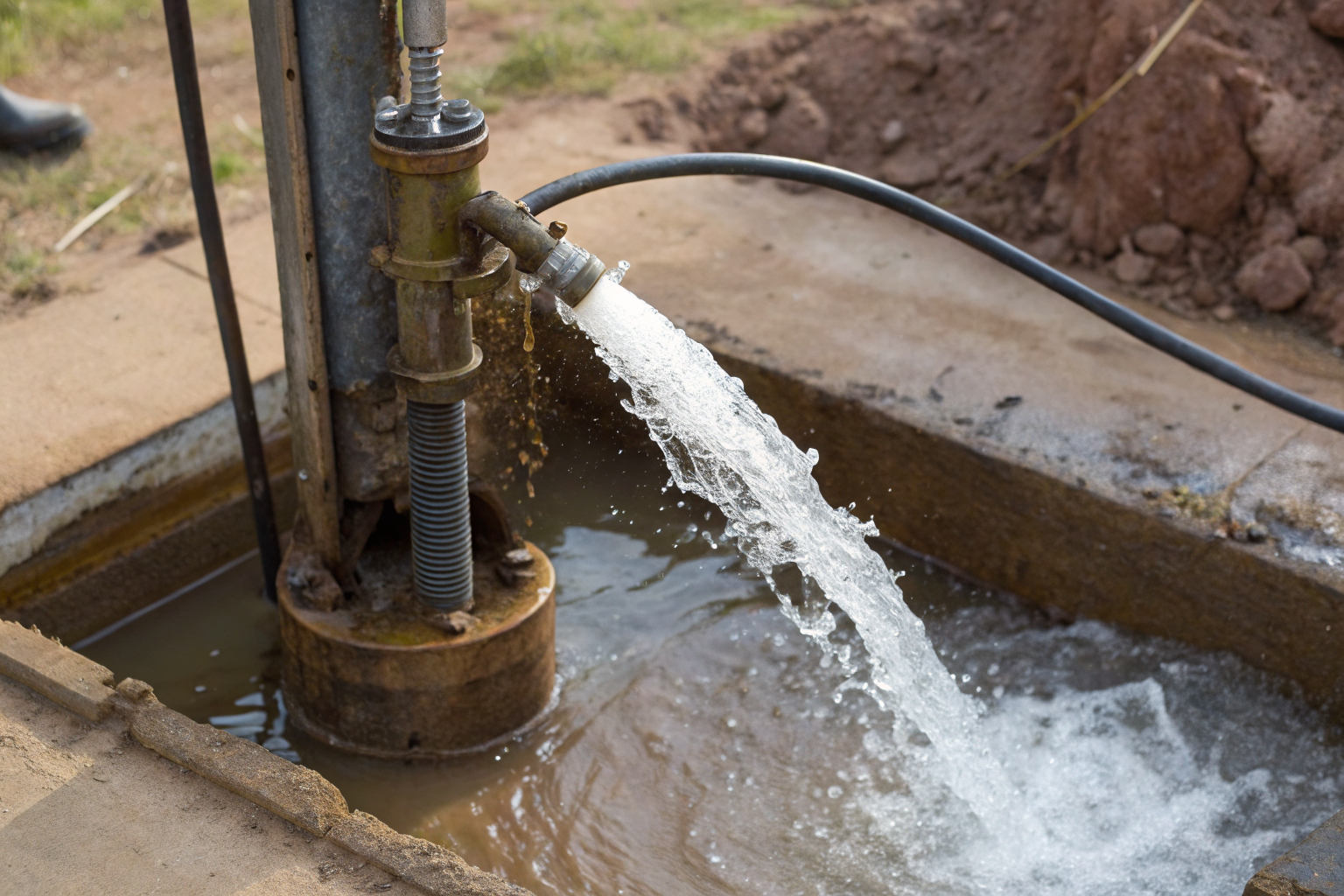
A well pump is a motorized device that creates pressure differential to move water from the aquifer through your plumbing system. This means the pump either pushes water up from below (submersible) or pulls it up from above (jet pump), depending on your well depth and water table.
Submersible pumps dominate residential installations because they handle depths from 25 to 400 feet. These units sit underwater at the bottom of your well, pushing water up through the drop pipe. The motor is sealed inside a waterproof housing, and the entire unit hangs from the drop pipe and electrical cable.
Jet pumps work differently. They sit above ground in your well house or basement, using suction to pull water up from depths under 25 feet. A jet assembly at the bottom of the well creates venturi suction when the pump forces some water back down through a return line.
The pump type you need depends entirely on your static water level, how far down the water sits when the pump isn’t running. Wells with static levels deeper than 25 feet require submersible pumps because jet pumps can’t create enough suction to lift water that high.
Pump sizing matters more than most homeowners realize. An oversized pump cycles too frequently and burns out the pressure switch. An undersized pump can’t keep up with demand and runs constantly. Your well driller should have sized the pump based on your well’s recovery rate and your household water usage.
What Does Your Pressure Tank Do and Why It Matters?
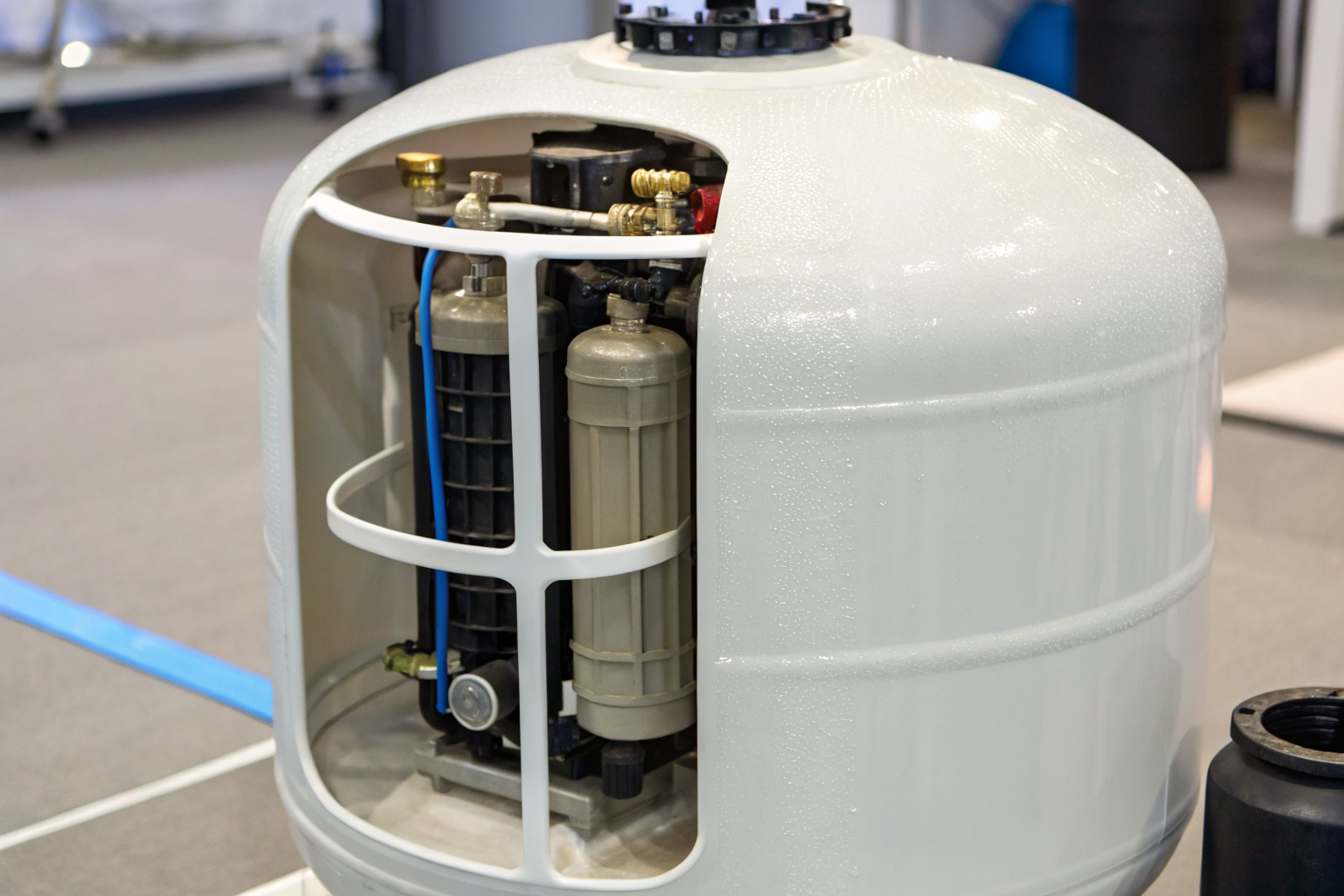
Your pressure tank prevents pump short-cycling by storing pressurized water for immediate use. This means when you turn on a faucet, water comes from the tank first, not directly from the pump running 200 feet underground.
The tank contains a rubber bladder or diaphragm that separates water from compressed air. As the pump fills the tank, it compresses the air, which pushes against the water. When you open a faucet, this compressed air pressure pushes water out of the tank and through your plumbing.
Standard residential pressure tanks cycle between 30-50 PSI with 20-80 gallon capacity depending on household size. The pressure switch kicks the pump on at 30 PSI (cut-in pressure) and shuts it off at 50 PSI (cut-out pressure). This 20 PSI differential gives you usable water without constant pump operation.
Tank sizing affects how often your pump cycles. A properly sized tank should provide 1-3 minutes of water flow before the pump starts. If your pump cycles every time someone flushes a toilet, your tank is either too small or has lost its air charge.
The pre-charge pressure, the air pressure in the empty tank, should be 2 PSI below your cut-in pressure. Most systems use 28 PSI pre-charge with 30 PSI cut-in. If this air charge leaks out, the tank becomes waterlogged and your pump will short-cycle itself to death.
How Do Well Casing and Cap Protect Your Water Supply?
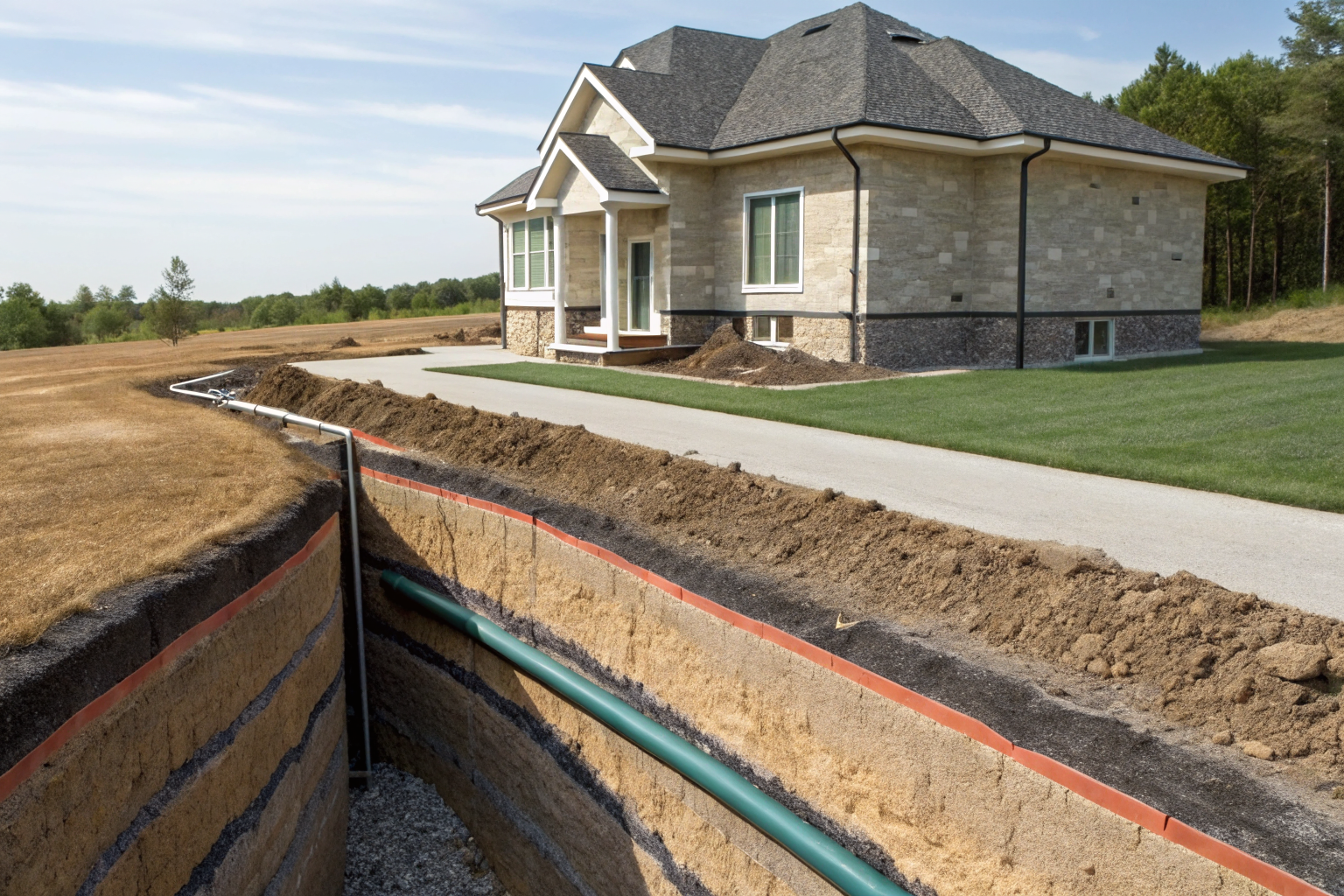
Well casing protects groundwater from contamination by creating a sealed pathway from the aquifer to your house. This means surface pollutants like fertilizer runoff, septic waste, or industrial chemicals can’t seep into your drinking water through soil layers.
Here’s how proper casing and cap installation works:
- Install steel or PVC casing from surface to at least 20 feet below ground, extending through any contaminated soil layers
- Seal the annular space between casing and borehole with bentonite clay or cement grout to prevent surface water infiltration
- Extend casing 6-18 inches above ground surface to prevent surface runoff from entering the well
- Install a sanitary well cap with gasket seal, screened vent, and locking mechanism sized for your casing diameter
- Slope the ground away from the well casing to direct surface water away from the wellhead
Casing material matters for longevity and water quality. Steel casing lasts 30-50 years but can rust and affect water taste. PVC casing resists corrosion but costs more upfront and requires careful handling during installation.
The well cap is your first line of defense against well water contaminant entry. A loose or damaged cap allows insects, small animals, debris, and surface water to enter your well directly. Standard caps include a screened vent to prevent pressure buildup while filtering out contaminants.
Damaged casing allows surface contamination to bypass the protective soil layers and enter your groundwater directly. Cracked casing near the surface is especially dangerous because shallow groundwater carries the highest concentration of surface pollutants.
What Is a Pitless Adapter and Why Your Well Needs One?
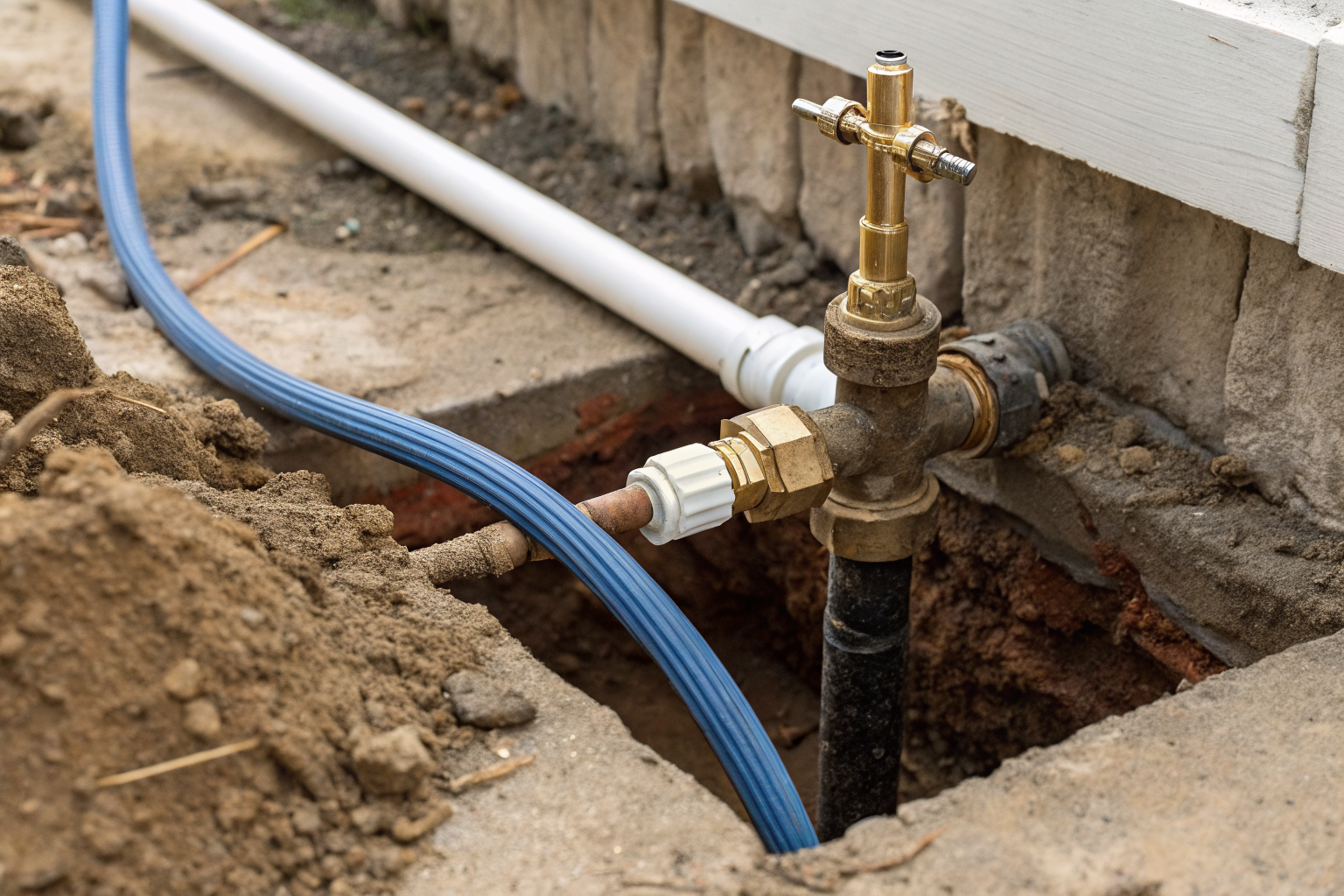
A pitless adapter is a mechanical connection that allows water to flow from your well into your house plumbing below the frost line. This means your water line stays unfrozen year-round without requiring an expensive below-ground pit that could flood or freeze.
The adapter consists of two parts: a casing-mounted unit that threads into a hole cut in your well casing, and a drop-pipe-mounted unit that connects to your submersible pump. These units lock together with a twist-and-seal mechanism that creates a watertight connection while allowing the pump to be pulled for service without excavating.
Pitless adapters install 4-6 feet below ground at frost line depth varying by climate zone. In northern states, this means 6+ feet deep, while southern installations might only require 3-4 feet. The connection point must stay below the deepest frost penetration to prevent freeze damage.
Your well maintenance calendar should include annual pitless adapter inspection. Check for leaks around the connection point, corrosion on metal components, and proper sealing of the casing penetration. A failing adapter can allow contaminated groundwater to enter your system or cause your pump to lose prime.
Without a pitless adapter, your well would need a below-ground pit to house the connection between well and house. These pits collect water, provide access for rodents and insects, and create freeze risk in cold climates. The pitless design eliminates these problems while maintaining easy access for pump service.
What Happens When Each Well System Component Fails?
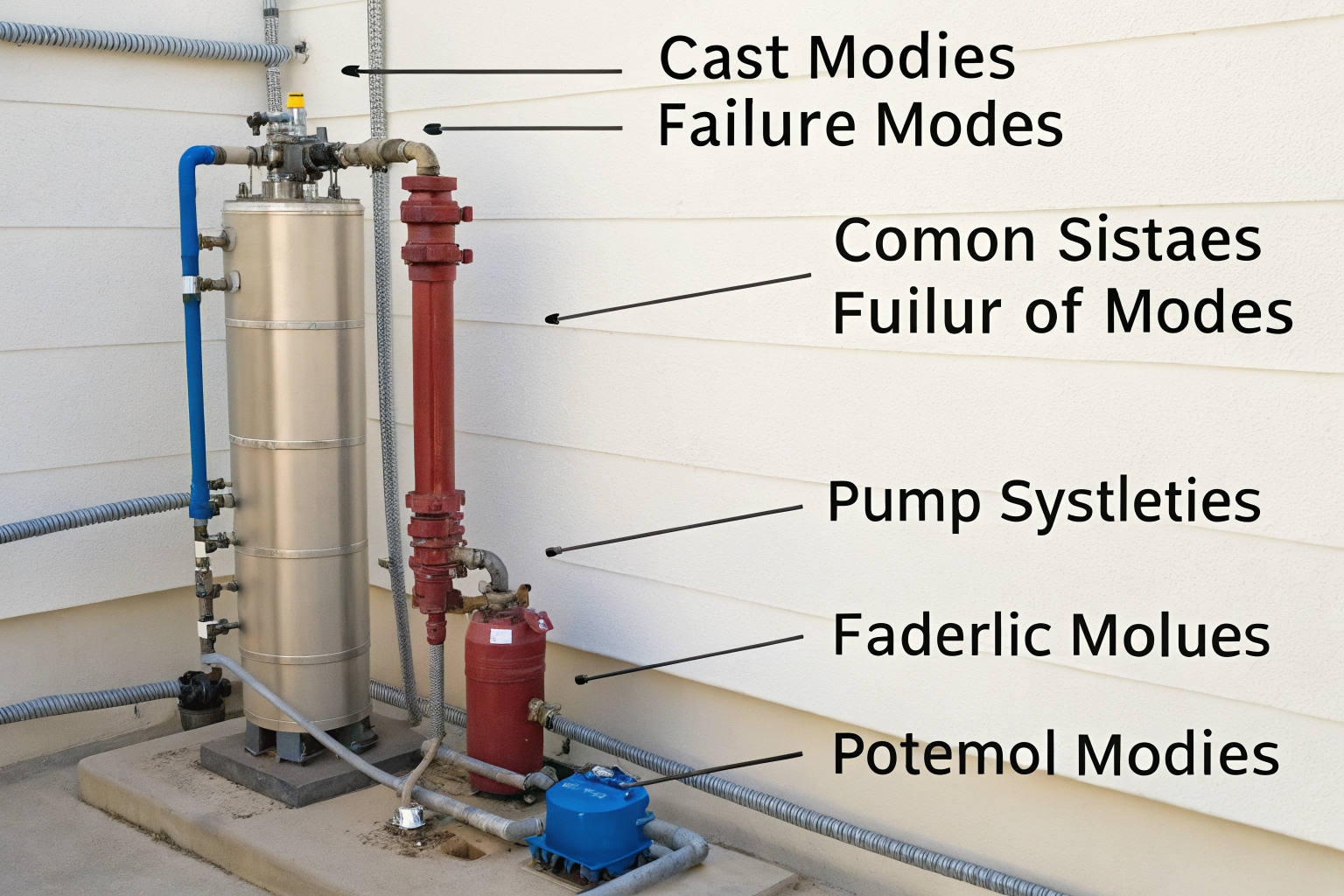
Component failures follow predictable patterns with specific diagnostic indicators for each part. Understanding these failure modes helps you respond appropriately and avoid making expensive problems worse.
Common failure scenarios include:
• Pump failure: No water at any faucet, pump won’t start, or pump runs continuously without building pressure. Usually requires professional replacement, especially for submersible units 100+ feet down.
• Pressure tank failure: Pump cycles every 30-60 seconds, water hammer when faucets close, or no water despite pump running. Often fixable by replacing the bladder or recharging with air.
• Pressure switch problems: Pump won’t start even with no water pressure, or pump won’t shut off despite adequate pressure. Switch replacement is straightforward for most homeowners.
• Casing damage: Sudden water quality changes, sediment in water, or contamination after heavy rain. Requires professional assessment and possible casing repair or shock chlorination treatment.
• Cap problems: Visible damage, loose fit, or insects/debris in well. Cap replacement is a simple DIY fix but requires proper sizing and sealing.
• Pitless adapter leaks: Water around wellhead, loss of prime, or frozen pipes despite adequate depth. Usually requires professional repair with specialized tools.
Emergency response depends on the failure type. Loss of water pressure from pump or tank failure needs immediate attention, especially if you have livestock or can’t go without water. Contamination issues from casing or cap problems require stopping water use and shock chlorination before resuming consumption.
Preventive maintenance following a well maintenance calendar catches most problems before they become emergencies. Annual inspections cost $150-300 but prevent $2,000-5,000 emergency repairs when systems fail during holidays or extreme weather.
Frequently Asked Questions
How deep is the average residential well?
Most residential wells range from 50-200 feet deep, though this varies dramatically by region and local water table depth. Shallow wells under 25 feet use jet pumps while deeper wells require submersible pumps for adequate water delivery.
How long do well system components typically last?
Submersible pumps last 8-15 years, pressure tanks 10-15 years, and pressure switches 5-10 years under normal conditions. Well casing can last 50+ years if properly installed, while caps and pitless adapters need inspection every 3-5 years.
Can I see all my well components or are some underground?
You can see the pressure tank, pressure switch, and well cap above ground, but the pump, most of the casing, and pitless adapter are underground. The only visible parts are the casing top (usually 6-18 inches above ground) and the cap.